I couldn’t resist posting this parting shot of the Cascades at night…… this was taken on our walk back from our first Armenian dinner. We were warned ahead of this trip not to expect to lose any weight and it didn’t take long for us to understand why that was said!

Of course, you don’t have to eat it all – but nobody wants to offend their hosts…. every lunch and dinner we have had so far has been three courses. A great deal of salad and spinach, but it comes on huge communal serving plates, along with the main course, so lots of restraint required!!
The main courses have been a bit mixed – some of it has been ‘eat to live’ but we have also enjoyed some excellent barbequed trout and pork.
There are 13 of us in our Merc minibus: driver, Armenian tour guide Laura, Wild Frontiers Tour Leader Dario who is ‘half and half’ [his words!] Ethiopian and Italian, a Canadian couple, an American couple, two other Americans, three Brits including yours truly and a gentleman from Singapore. Cosmopolitan or what??? There will inevitably be a group photo at some stage and i will post it when that happens…..
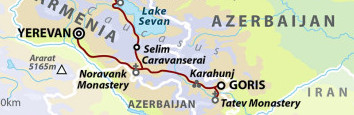
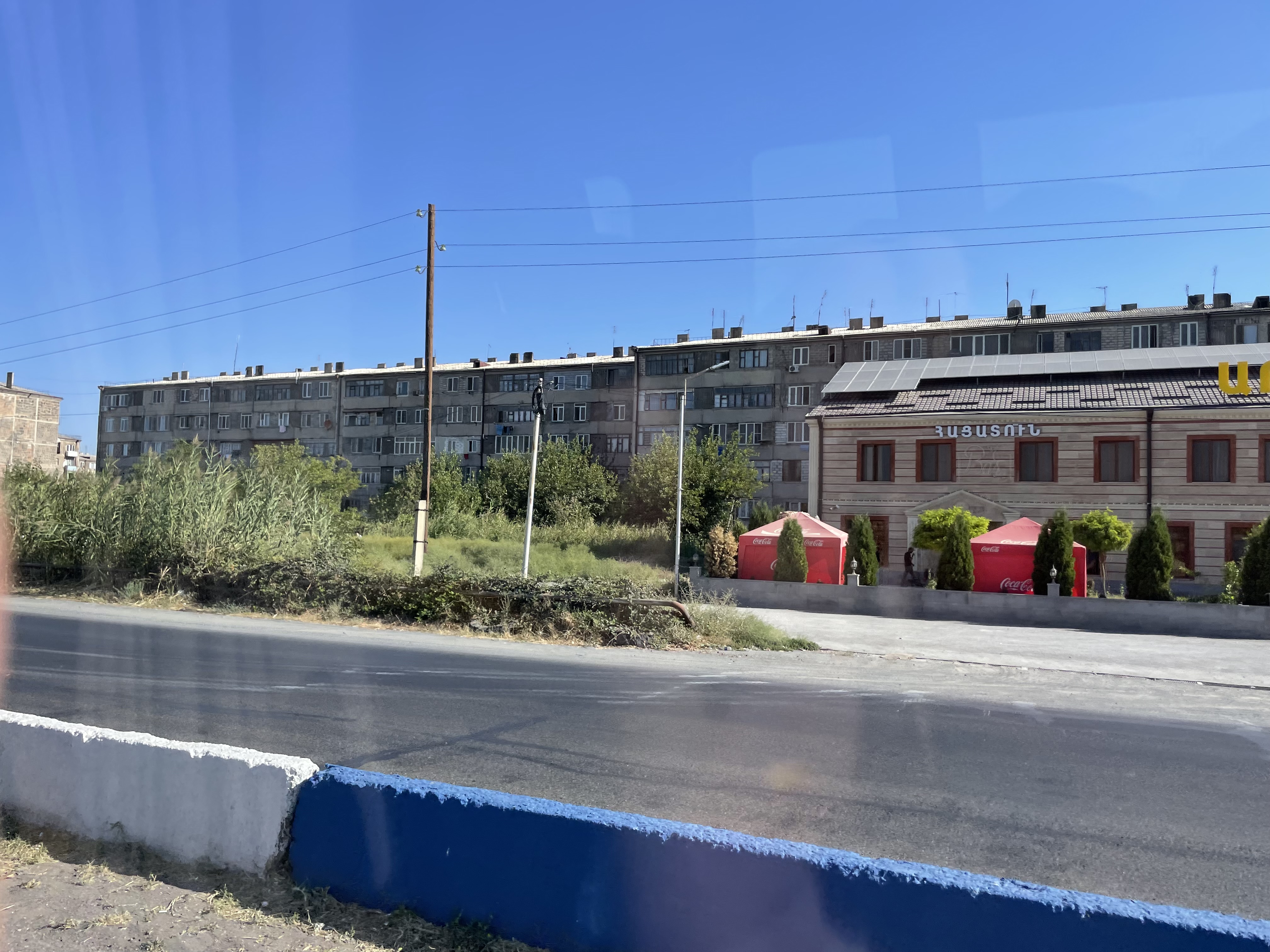
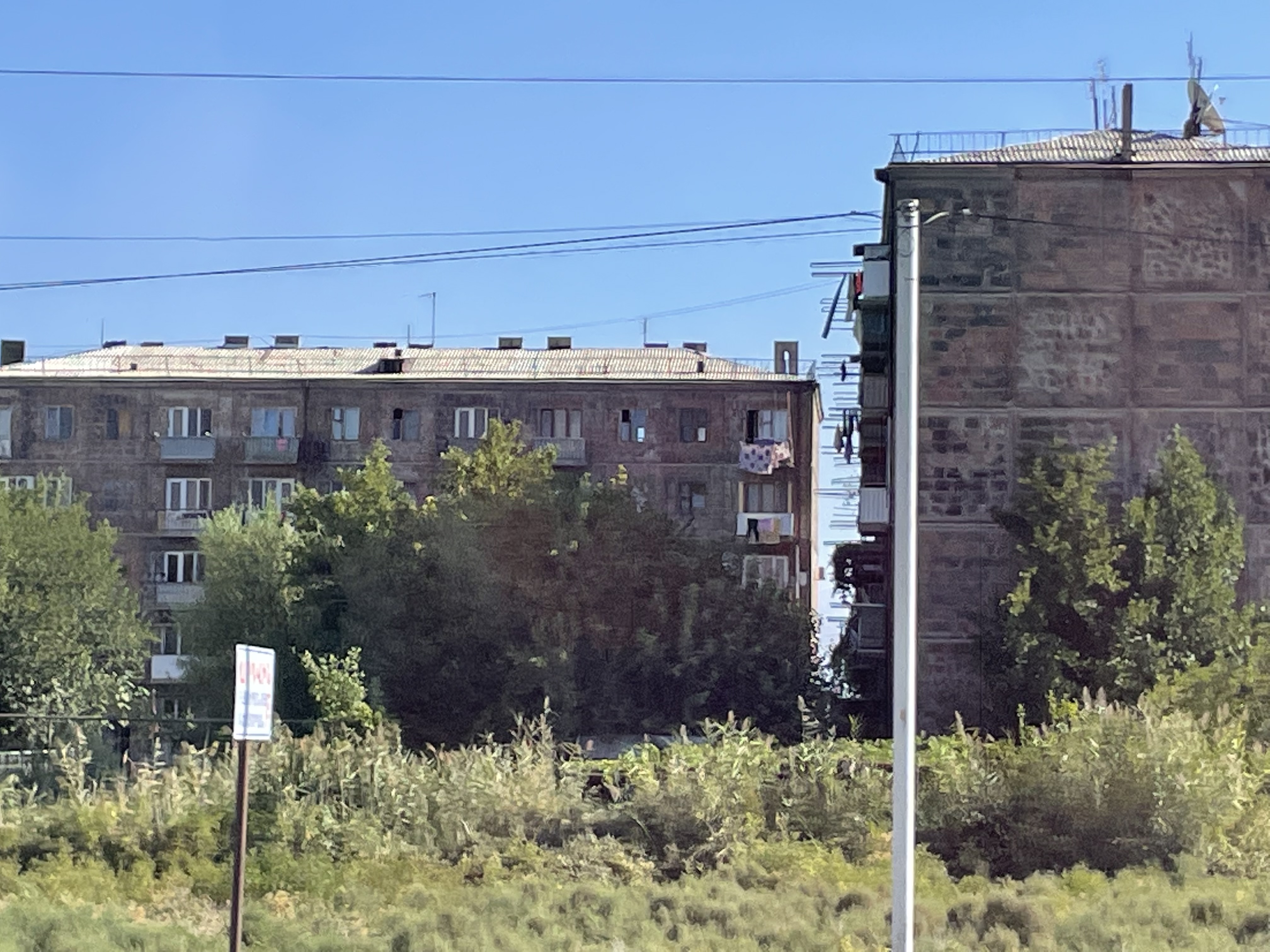
As we set off heading east towards Goris we saw hundreds, probably thousands of these Soviet era apartment blocks. They look pretty scruffy!!
Our first stop on the tourist trail was to get a view from distance of the Khor Virap Monastery:
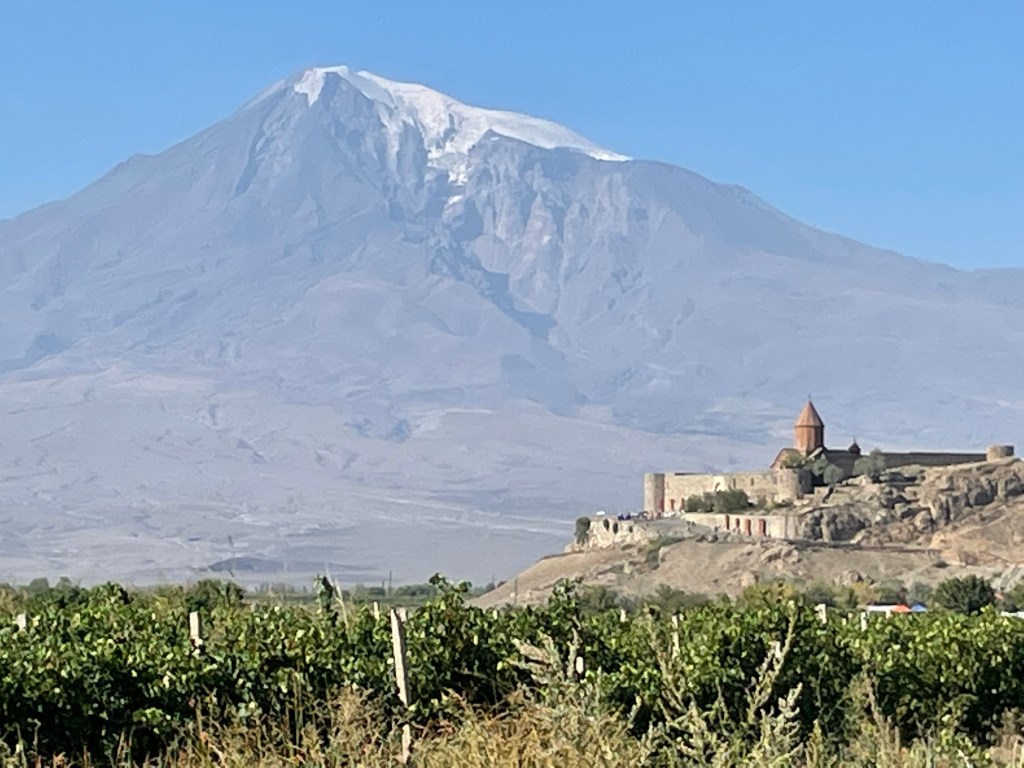
That’s Greater Ararat mountain soaring up to 16,853 feet behind Khor Virap. Armenia has been nibbled away at by its bigger neighbours for centuries: Mount Ararat is a good example having previously been located in Armenia, it is now part of Turkey.
Khor Virap is one of the most visited piligrimage sites in Armenia largely because Gregory the Illuminator was imprisoned here for 14 years by King Tridates 3rd of Armenia. Despite this, Saint Gregory subsequently became the king’s religious mentor and by the year 301, Armenia was the first country in the world to be declared a christian nation. A chapel was initially built in 642 at the site of Khor Virap by King Nerses 3rd known as The Builder as a mark of veneration to Saint Gregory.
Over the centuries, the monastery was repeatedly rebuilt and in 1662, the larger chapel known as the “St. Astvatsatsin” (Holy Mother of God) was built around the ruins of the old chapel, the monastery, the refectory and the cells of the monks. Now, regular church services are held in this church.
The mountain scenery in this part of Armenia is ruggedly dramatic, but looks mostly dry and barren with pockets of heavily watered agriculture. These pics will give you some idea:
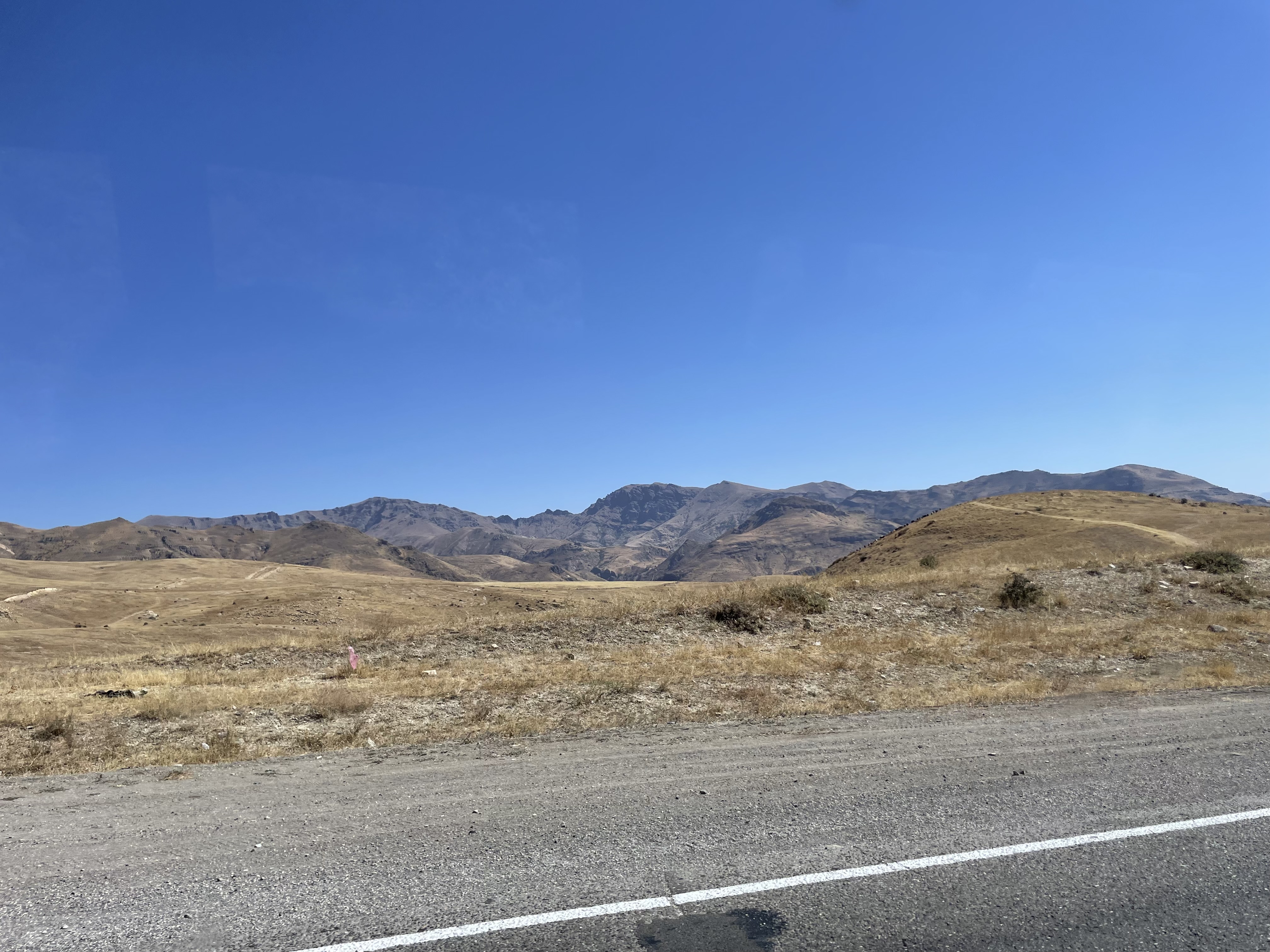
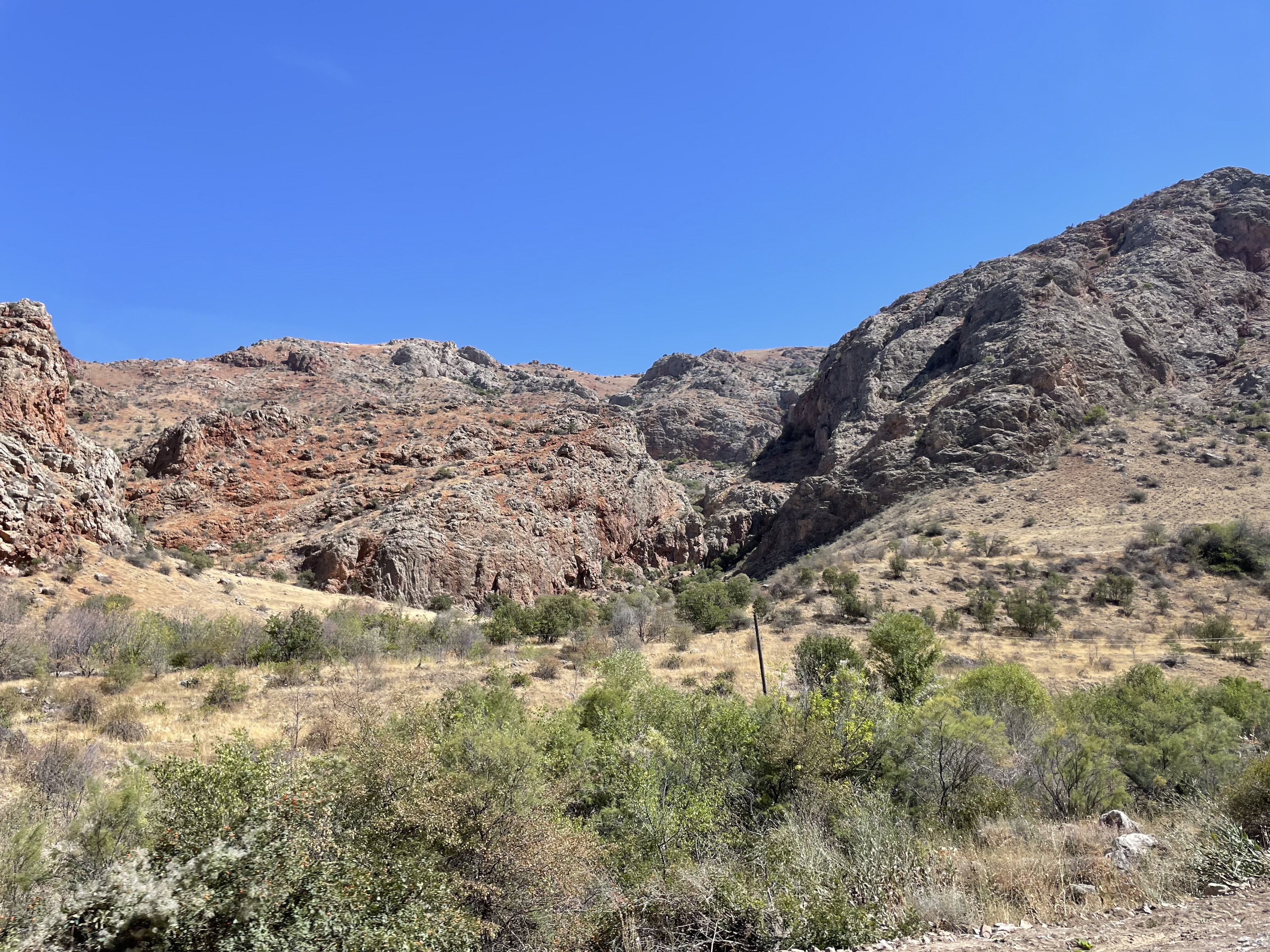
Heading further west along the road to Goris we then made a detour south up a huge canyon created by the Amaghu river to go visit the Noravank Monastery complex. Constructed mainly in the 13th century Noravank is not quite as ancient as Khor Virap but if you ever fancied a life of quiet contemplation then way up here in the Armenian mountains would be a great choice!!
There are two main churches on the site: St. Astvatsatsin (Holy Mother of God) an unusual two story construction and St. Karapet Church which has been rebuilt several times as a result of earthquake damage.
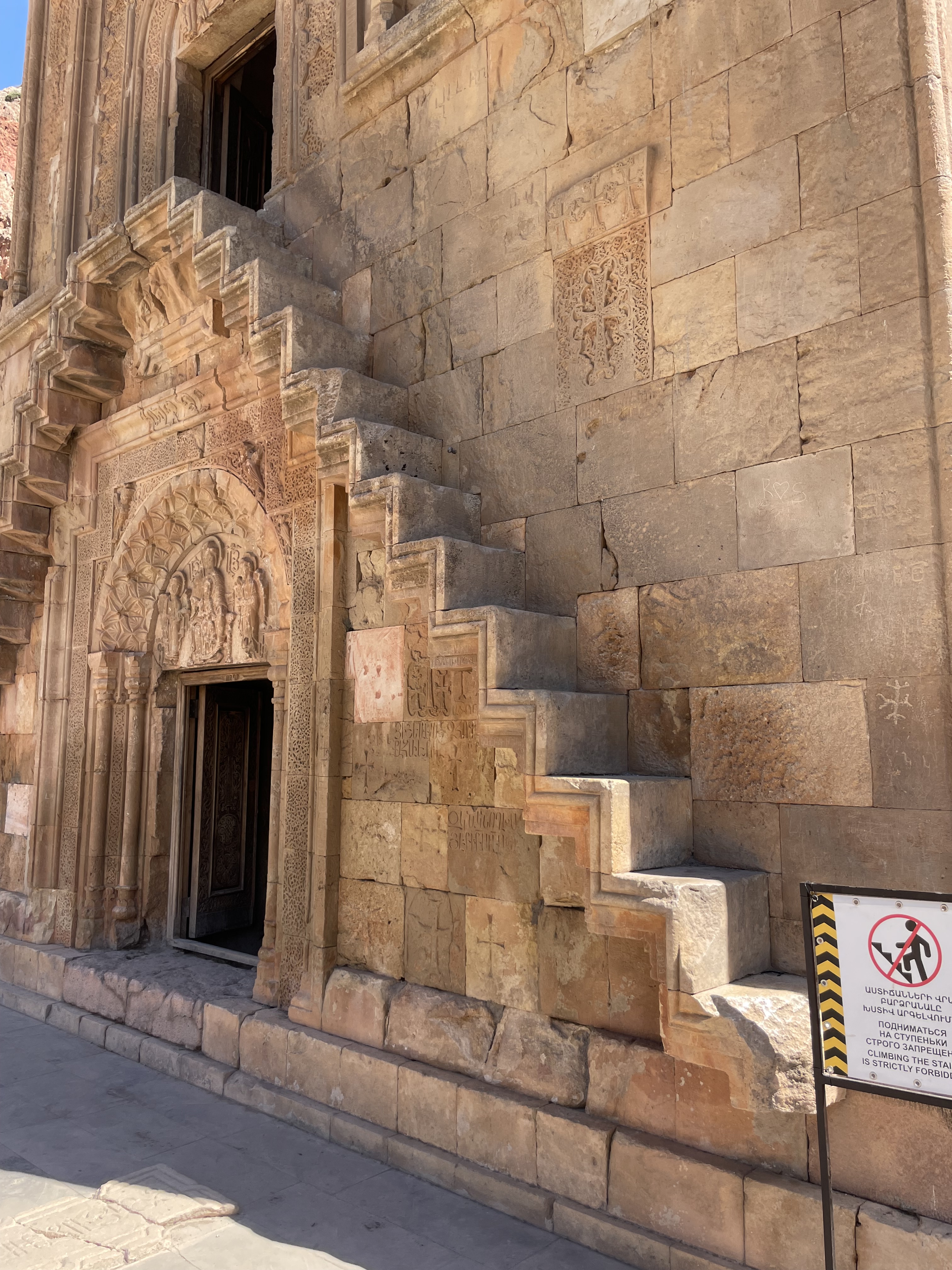
Here are some pics of St. Astvatsatsin which was completed in 1339 by the famous Armenian architect Momik.
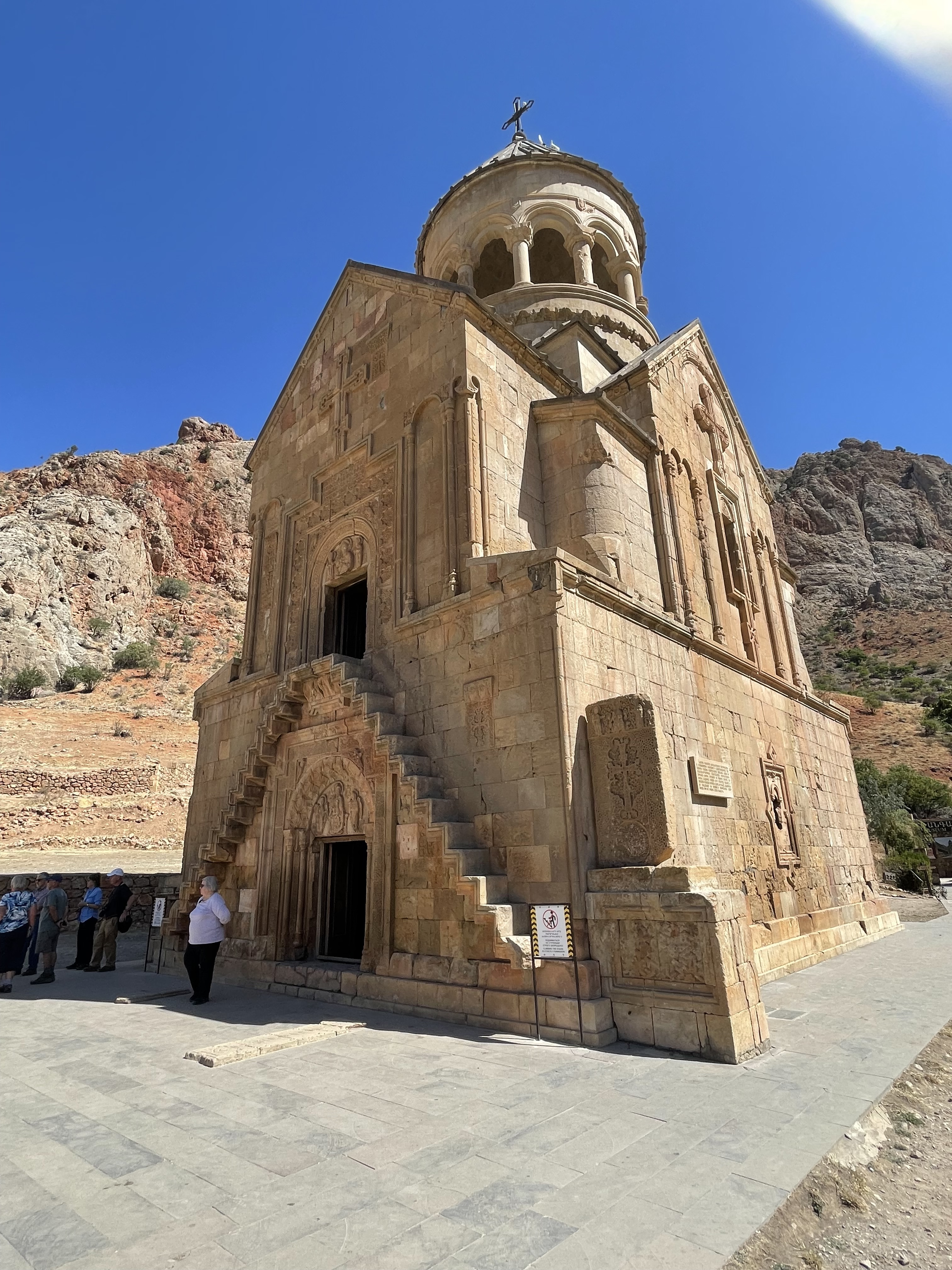

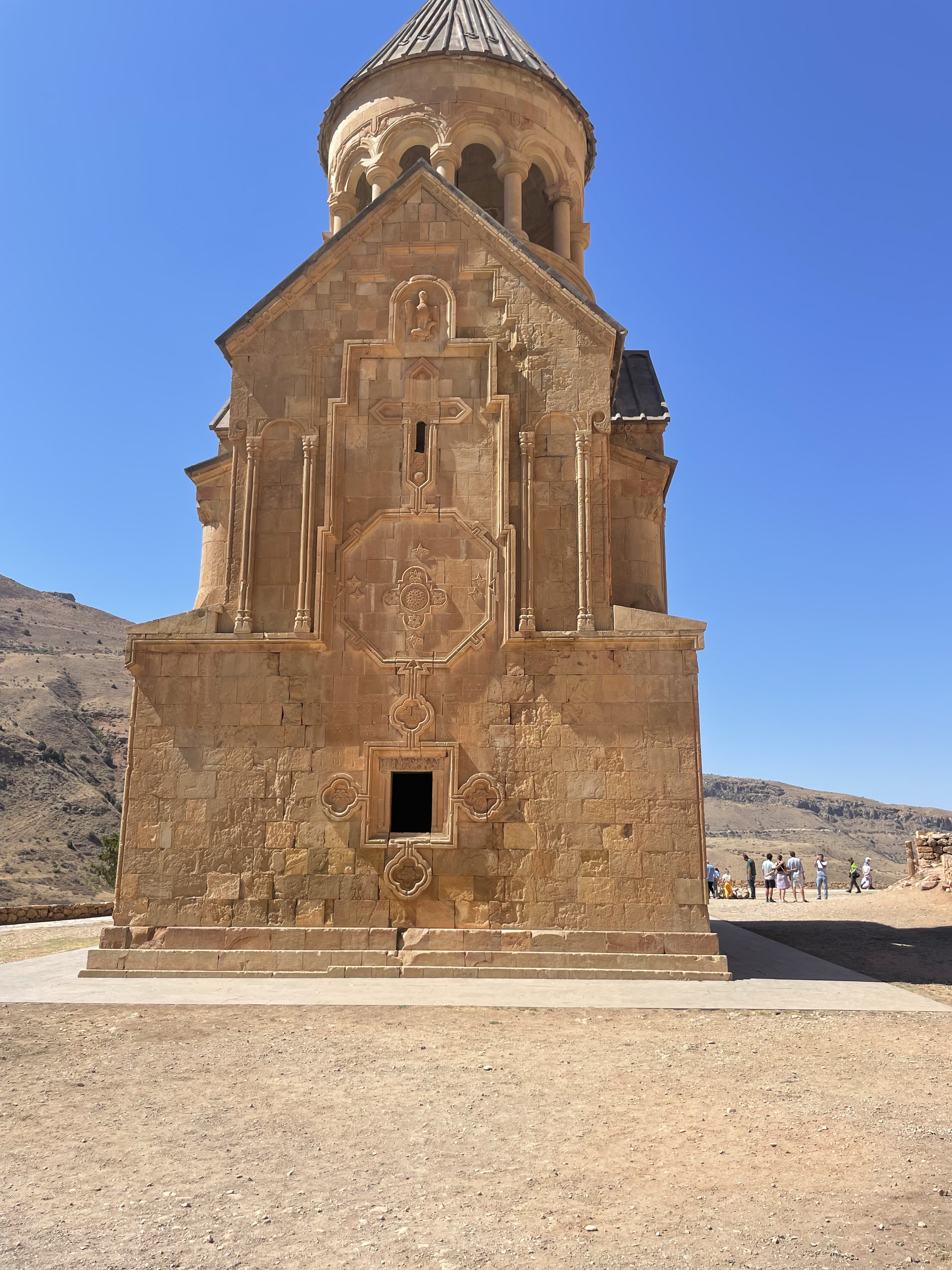
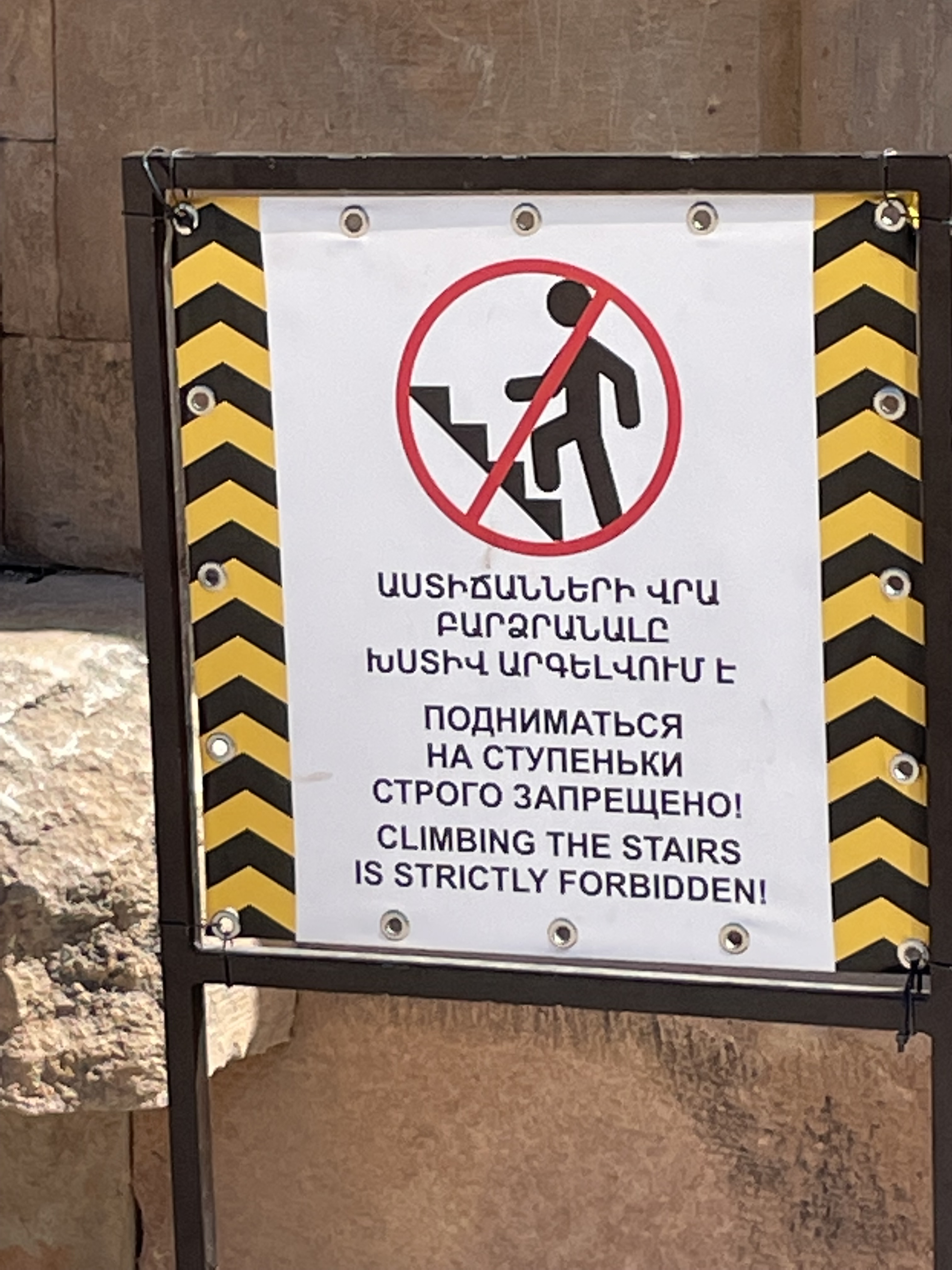
As you can see it has a rather unusual external staircase which we were heavily discouraged from attempting to climb. These pics probably make clear why that is!!!
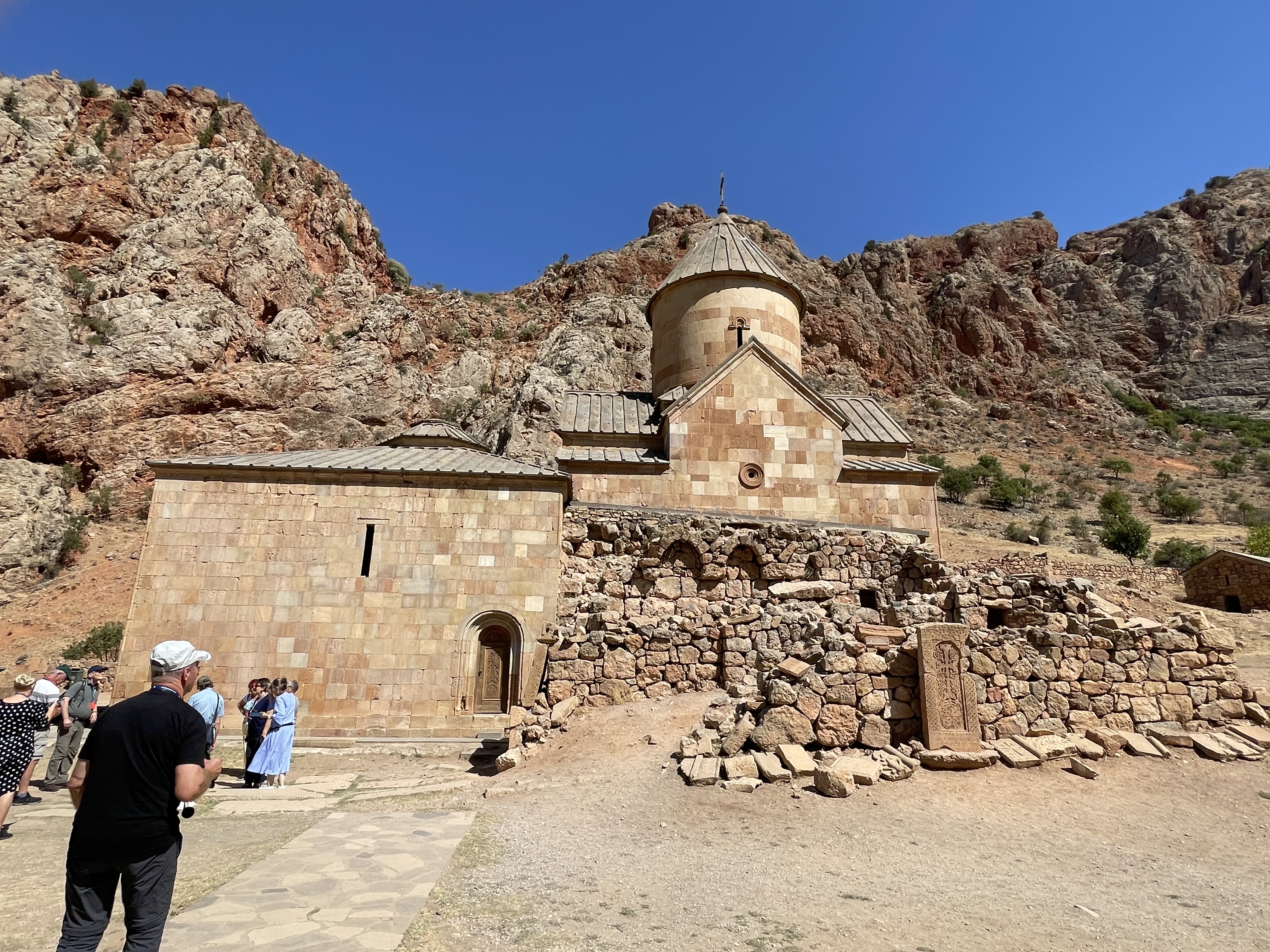
The slightly older St. Karapet Church was originally built in 1216 to 1227, but has seen substantial repair and renovation over the centuries, usually as a result of earthquake damage, most recently in 1931.
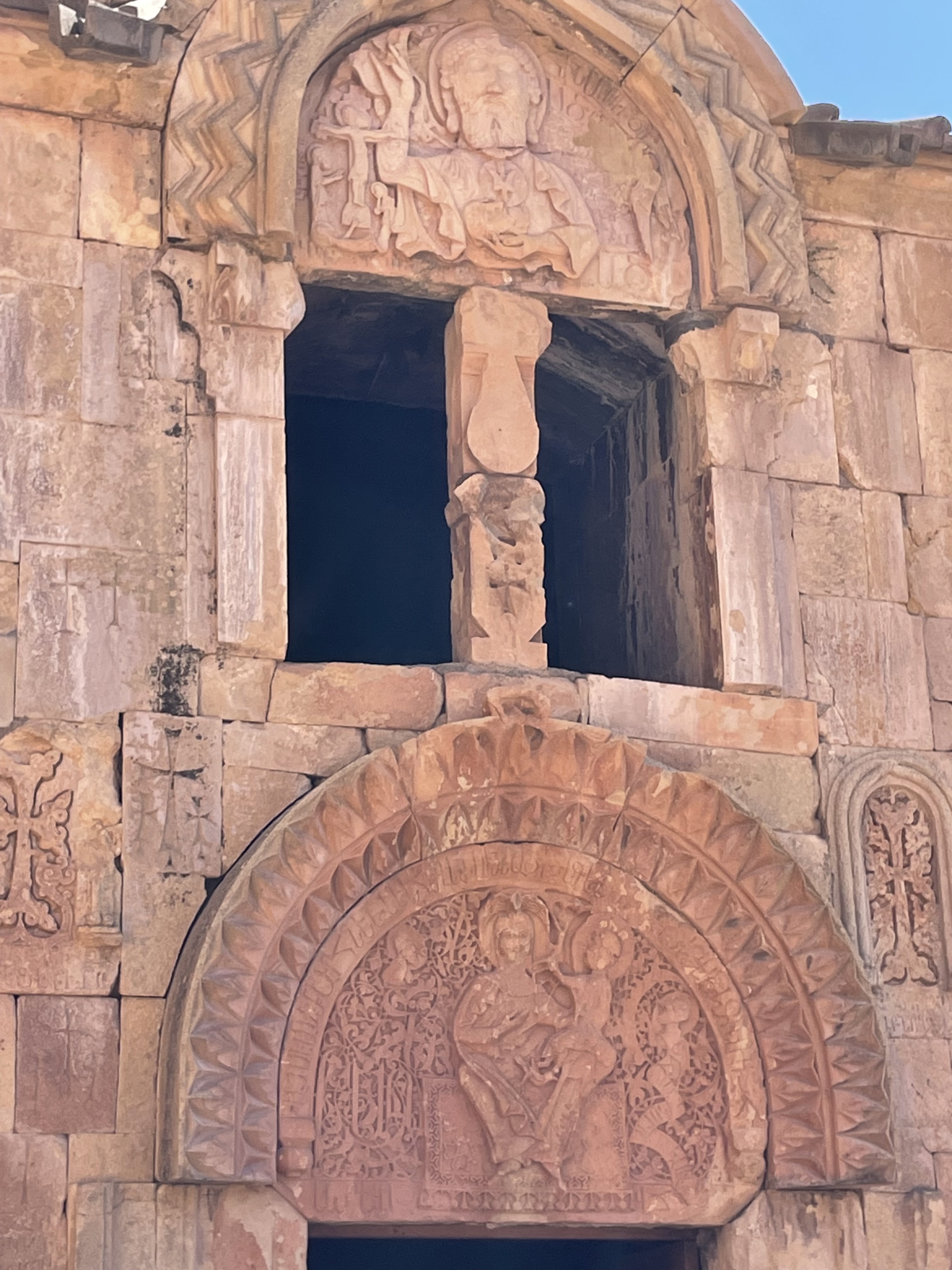
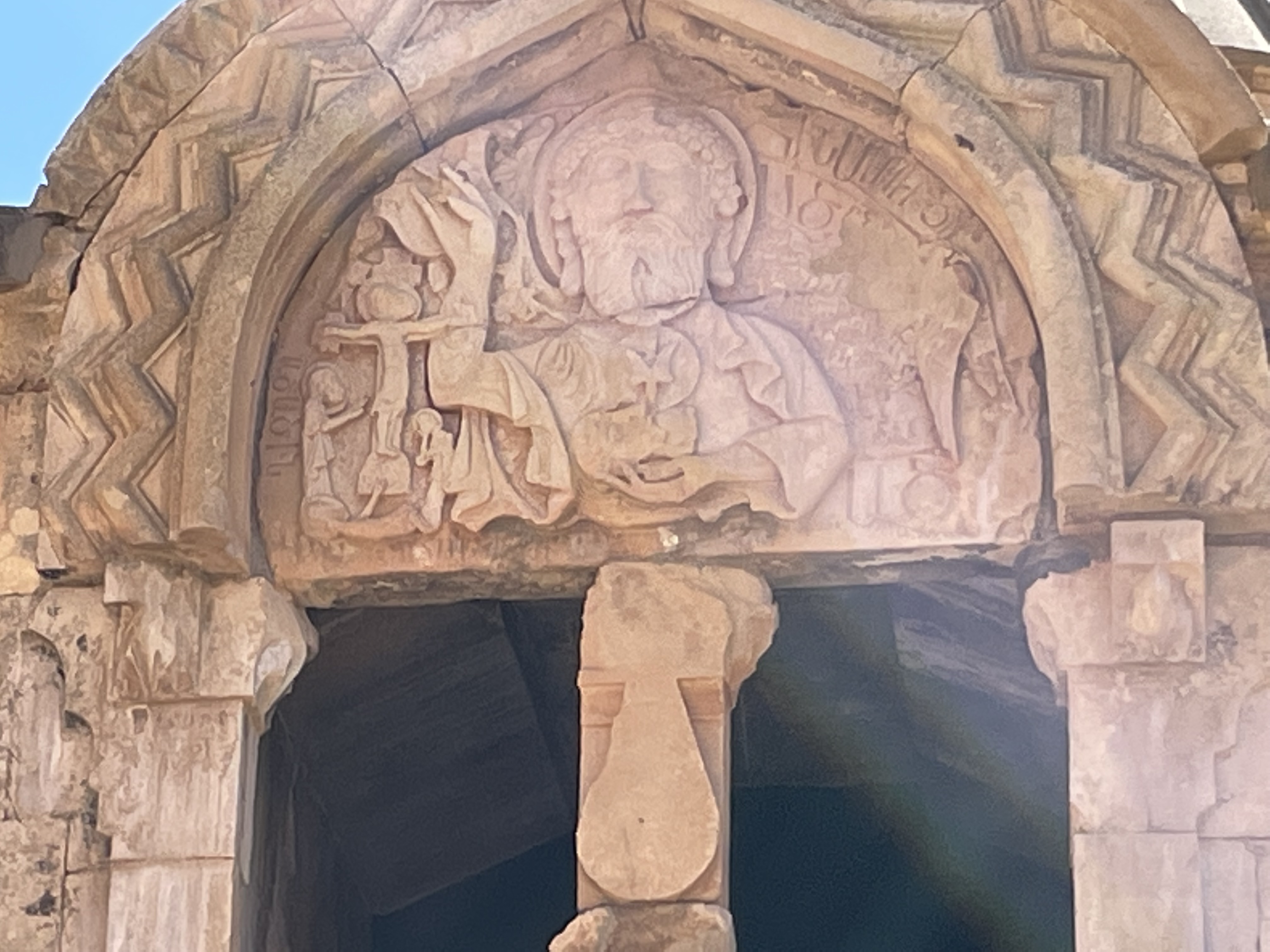
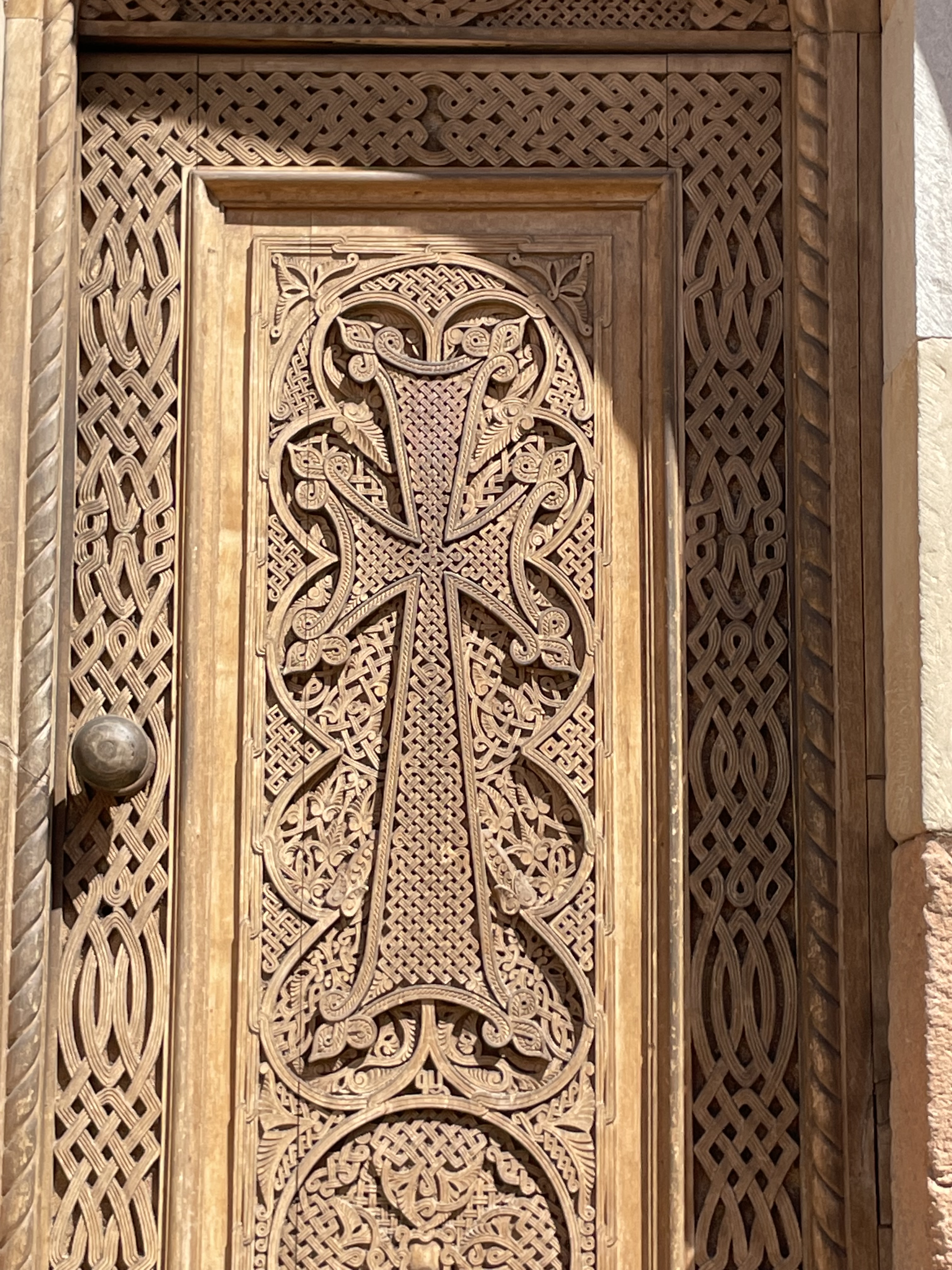
Here are some pics of the outside of the Church and its Gavit [sort of ante chamber], in particular the famous carvings on top of the entrance to the Gavit, plus a beautifullly carved wooden door to the side of the church itself:
The interior of St. Karapet Church:

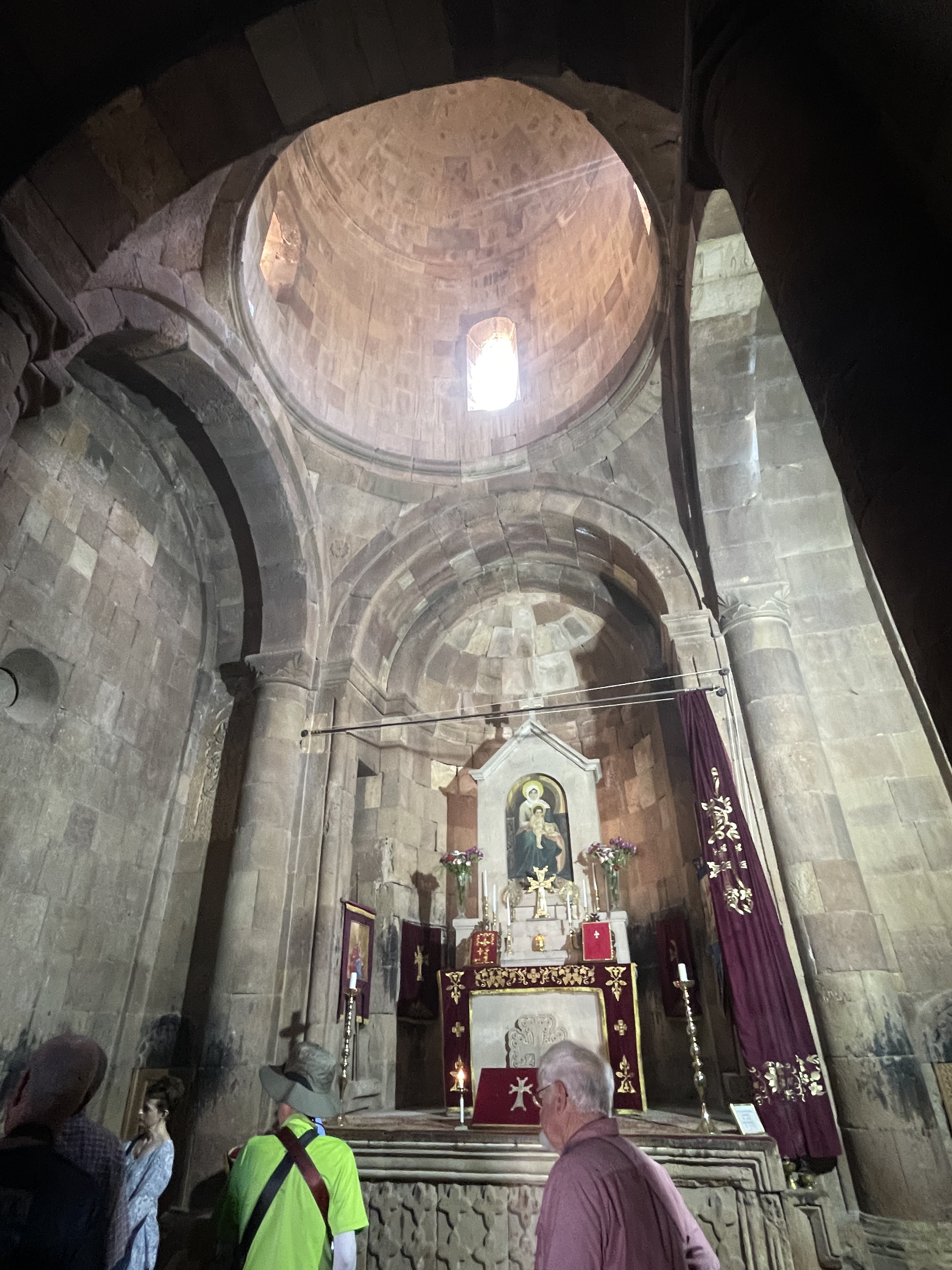


The pic on the left demonstrates the complexitiy of some of the construction work completed almost 1,000 years ago. The medieval natural lighting of the altar and its holy paintings is remarkable and i can only assume the modern [very limited] electric lighting was designed to supplement the natural lighting in dusk or bad weather.
Before we resumed our journey to Goris we stopped off for lunch: it also gave some of our number the opportunity to inspect a winery and indulge in some wine tasting….. They reported back very favourably on the quality of the wine and many have continued to enjoy a glass or two at lunch and dinner!
Having spent some three hours at Noravank we headed off back down the canyon towards Goris to inspect the ancient standing stones at Korats Karer. These were some years ago formally christened ‘Stonehenge’ by the Armenians. Gotta say, although they are very impressive, as we shall see, they are not on the scale of the UK’s version….
Here are some pics from our drive to Korats Karer:
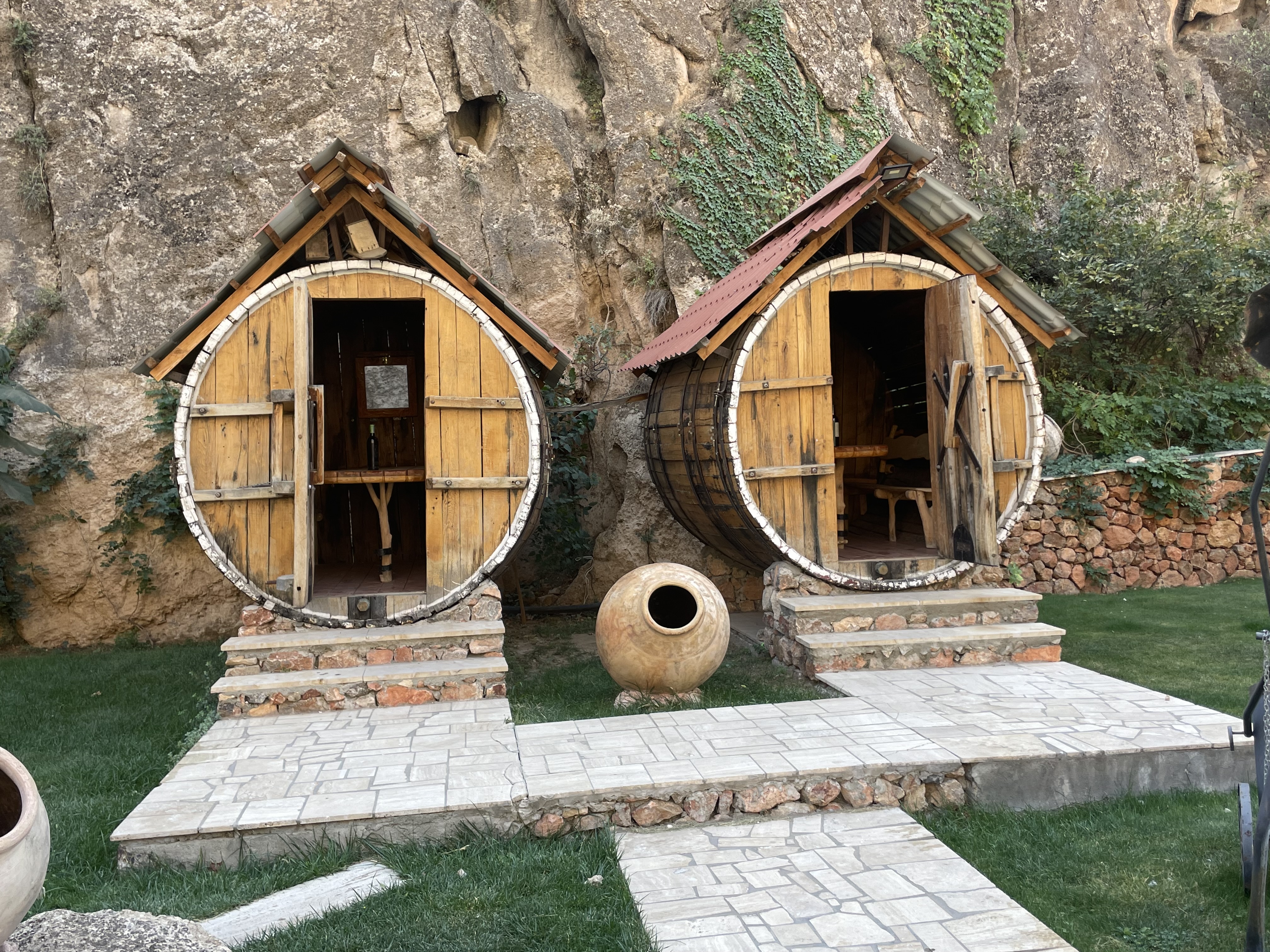
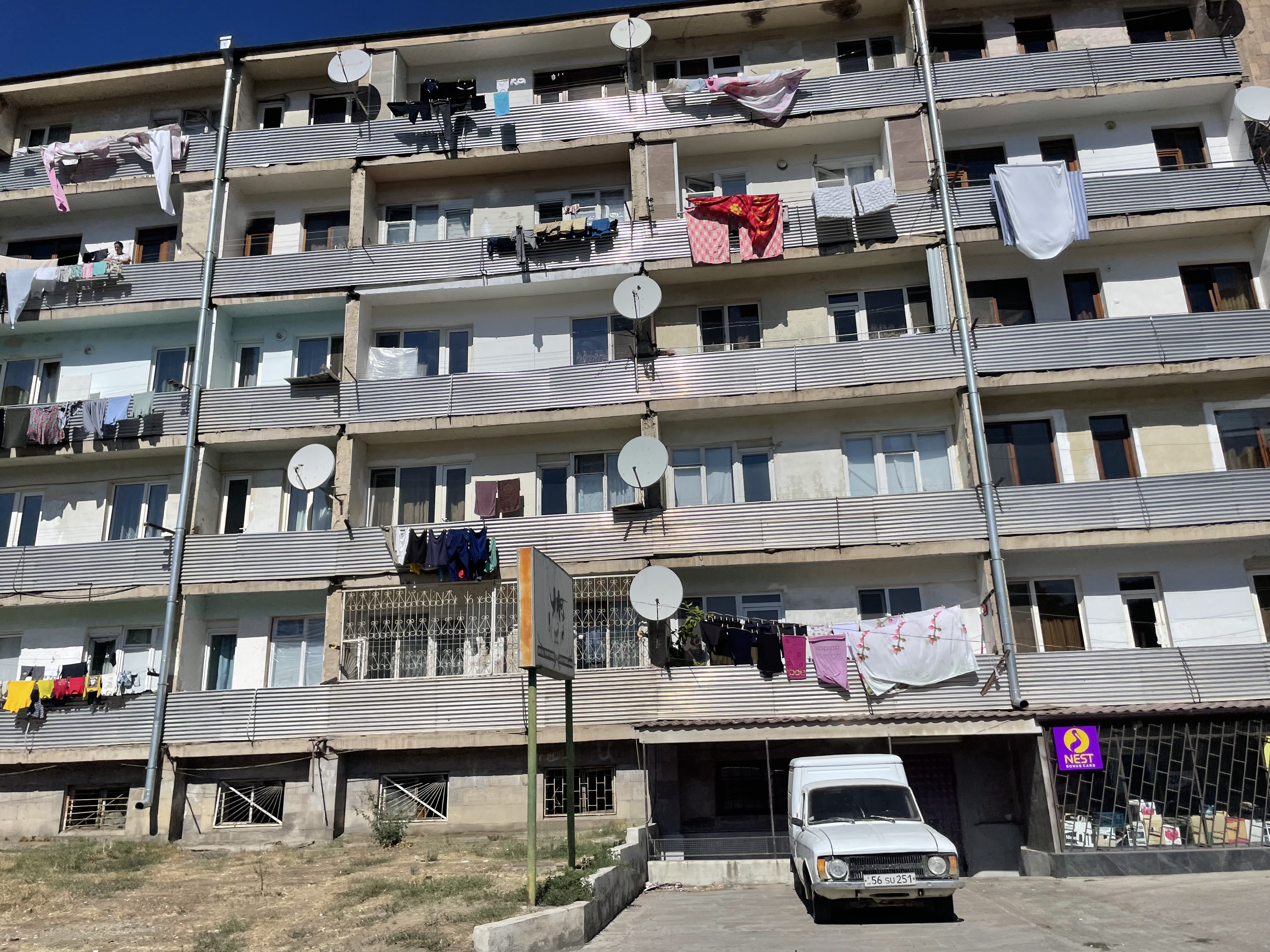
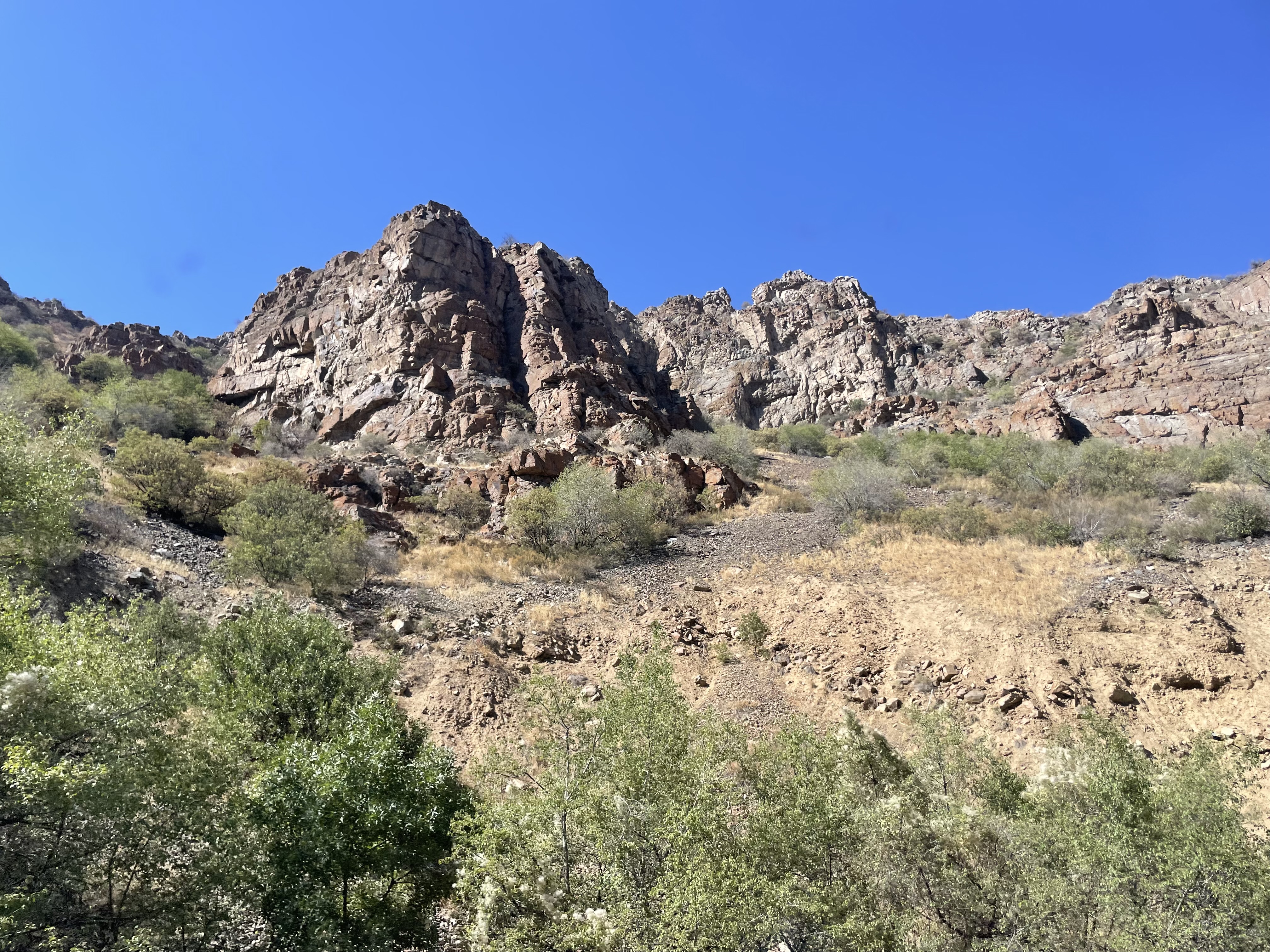
The first pic shows the large wine barrels in which wine tasting takes place! The second is another image of some of the Soviet area apartment buildings and the third shows you that the dramactic mountain scenery in this part of the world continued as we drove further east.
Here is a vid of the very extensive site of the Korats Karer [Stonehenge] standing stones:
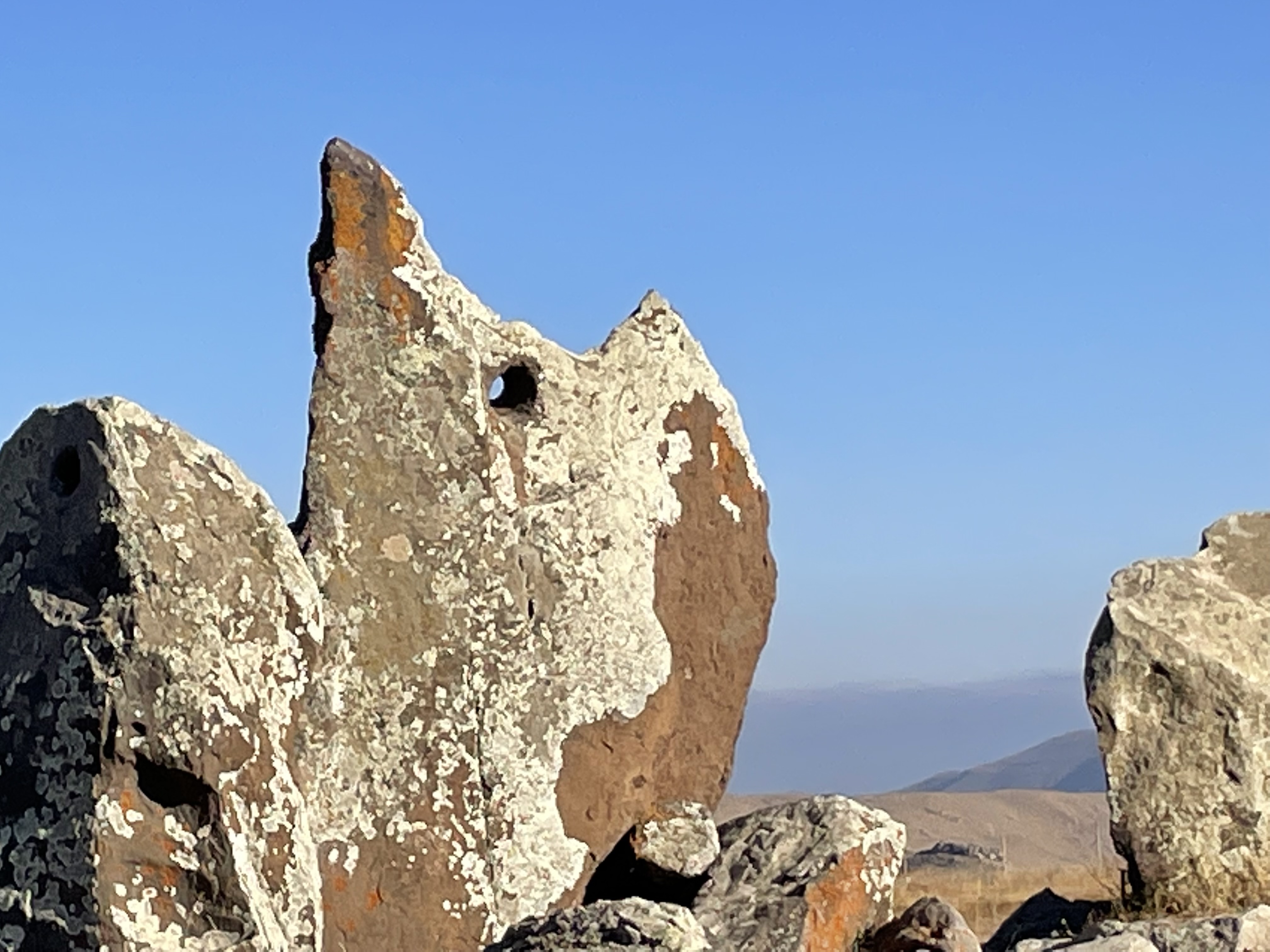
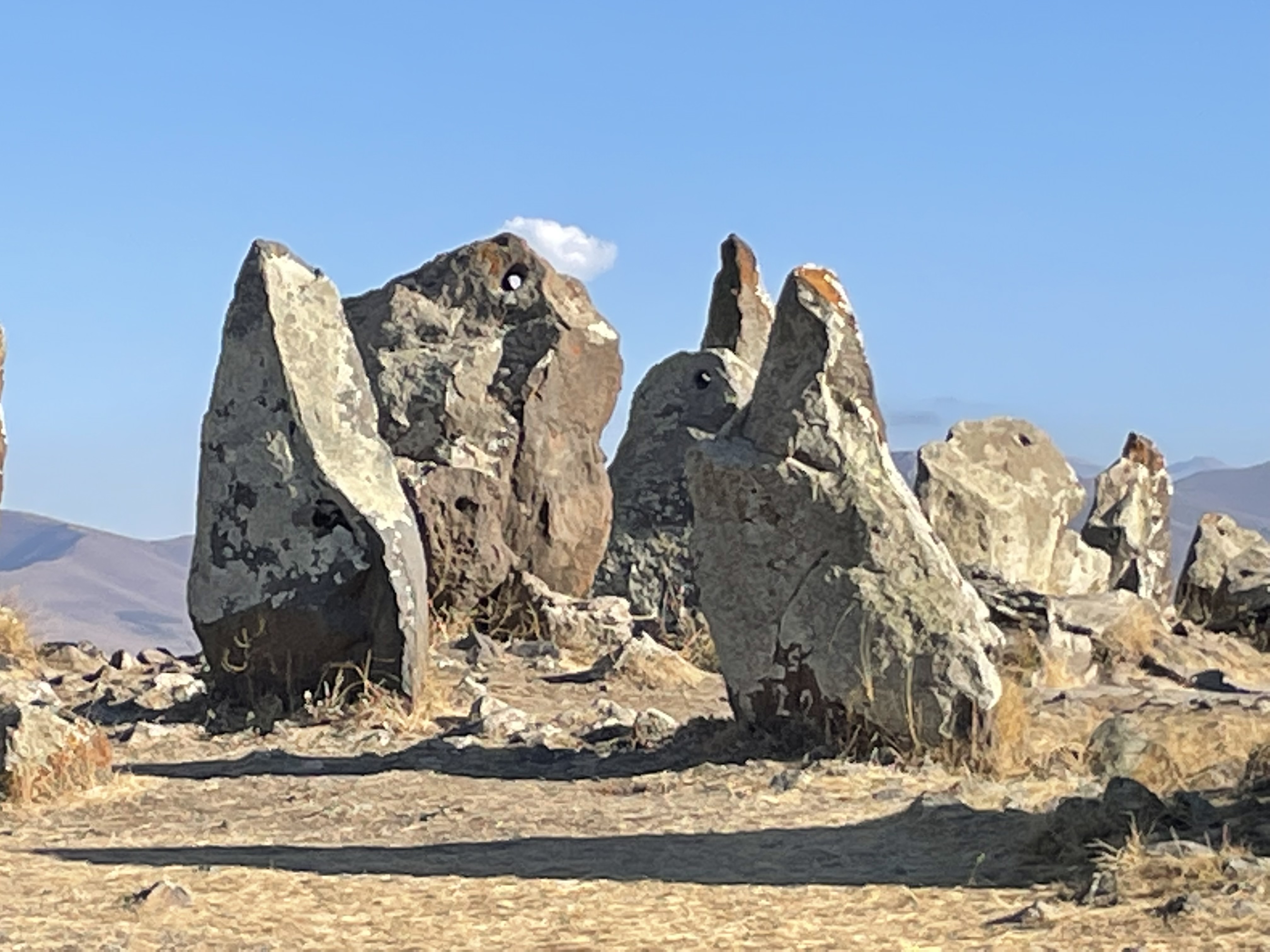
The Armenians estimate that their Stonehenges is 3,500 years older than the one in Wiltshire. The site was officially renamed Karahunj Observatory in 2004 when Armenian academics found that it was likely once an observatory. That conclusion was based on detailed analysis of the meaning of the holes in 80 of the 223 stones on the site. The academics reckoned that seventeen of the stones were used to observe the sunrise and sunset at the solstices and equinoxes and 14 of them were associated with 7500-year-old lunar observations.
We need to bear in mind that there are a few other theories about the stones, their genesis and purpose, but the Armenians themselves are firmly convinced that their conclusion is the correct one. In the booklet they sell at the site they say that their conclusions were endorsed by no less an authority than Professor Stephen Hawking!
Here are some pics of the stones and their holes:
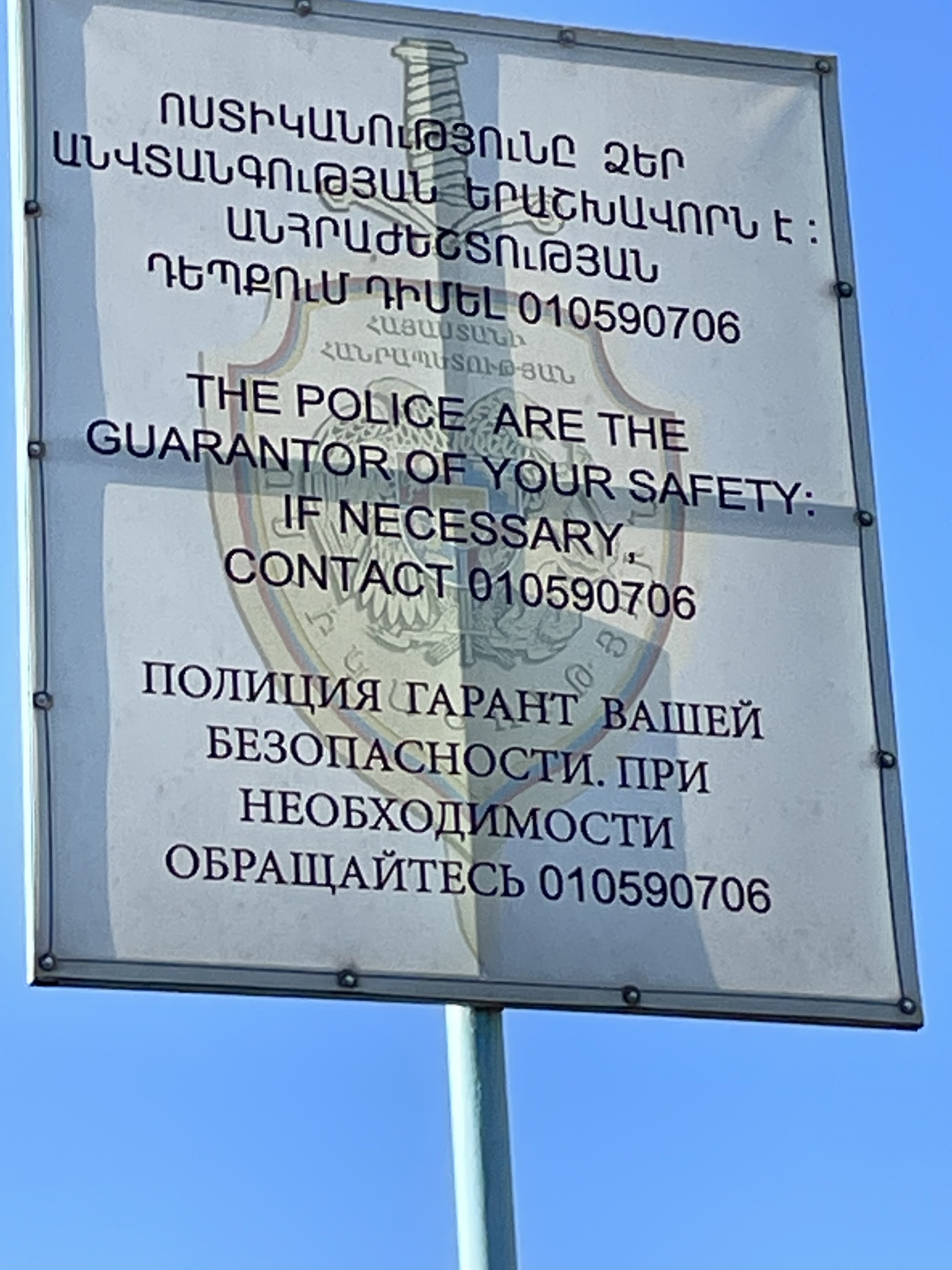
To finish on a more light-hearted note here are a couple of pics you might enjoy: first two ‘loos with a view’ and secondly a reassuring sign, both at Korats Karer.

Tomorrow we retrace our steps back towards Yerevan before heading north to Dilijan, our final overnight in Armenia before heading to Georgia.
Onward!
 Tony's Geriatric Adventures
Absolutely fantastic! Loved the churches!
LikeLike