Turkmenistan is another of the former Soviet Republics that formed part of the USSR and became independent when that state fell to pieces in 1991. Since then it has had two rulers, both of whom had previously been high ranking officials in the Turkmen SSR. It was ruled initially by President for Life Saparmurat Niyazov until his death in 2006. Gurbanguly Berdimuhamedow was elected president in 2007.
August 2022 update: Gurbanguly Berdimuhamedow stepped down as president in March 2022, likely due to ill-health, and following a hurriedly arranged ‘election’ in which he received 73% of the vote the country is now ruled by his son: Serdar Berdimuhamedow aged 40. There is no sign of any change in the way the place is run!!!
According to Human Rights Watch Turkmenistan remains one of the world’s most repressive countries. The country is virtually closed to independent scrutiny, media and religious freedoms are subject to draconian restrictions, and human rights defenders and other activists face the constant threat of government reprisal. Still, most of us knew all that before we came…
As part of the Great Game the Russian Empire eventually crushed the Uzbek khanates that controlled the country and in 1881 the final Turkmen resistance was destroyed at the Battle of Geok Tepe.
There followed a period of confusion and conflict which resulted in 1924 in the formation of the Turkmen SSR from the tsarist province of Transcarpia. Events in 1991 then led to the creation of the independent state of Turkmenistan – a change the country was woefully ill-prepared for. The rule of Niyazov has been likened to that of Kim Il-sung of North Korea and little has changed under his successor Gurbanguly Berdimuhamedow who contrived to be re-elected to the presidency in 2012 with 97% of the vote.
Back to Daily Reports
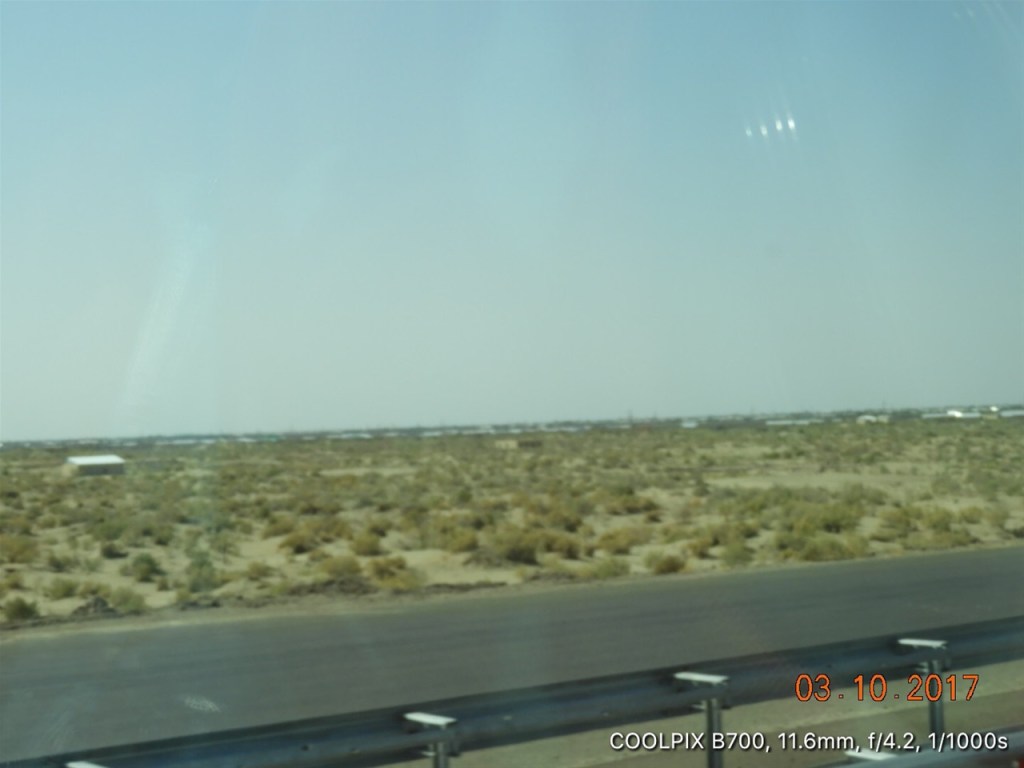
The Karakum Desert covers 80% of the land surface of Turkmenistan and pretty grim it is too…. No sign of the large scale irrigation to facilitate agriculture that we saw in the Chinese Gobi desert. Seems like most of the land we saw is only good for low level grazing in its current state.
Across the border into Turkmenistan and these are the road and rail bridges over the Qaraqum Canal. This canal runs for 854 miles and carries water from the Amu-Darya River on the border with Uzbekistan across the Karakum Desert, through Ashgabat and drains into Caspian Sea at Turkmeanabat [formerly Krasnovodsk].
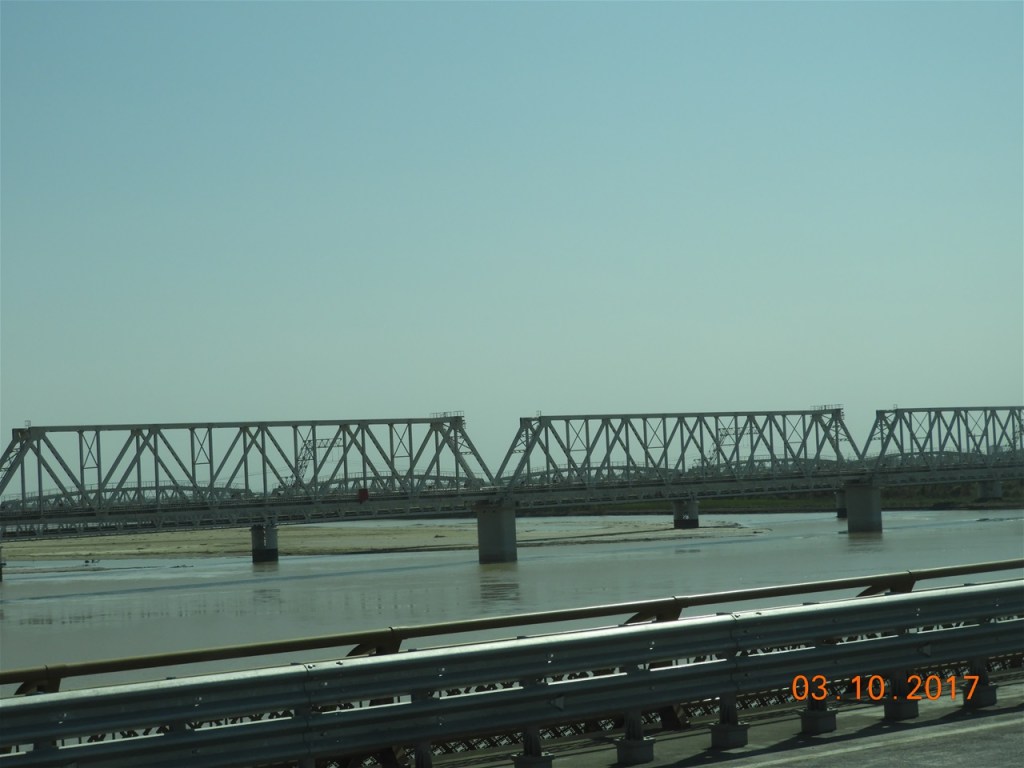
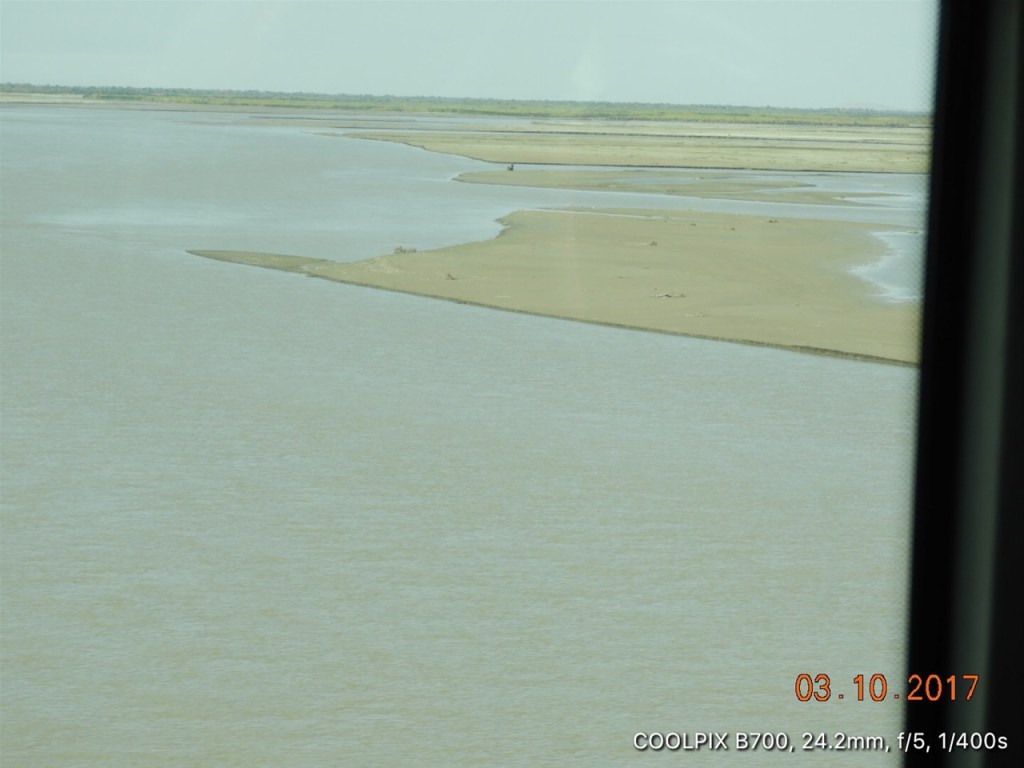
Another shot of the Qaraqum Canal. Construction was started by the Soviets in 1954 and completed in 1988. The intention was to open up huge tracts of former desert land to agriculture, mainly cotton monoculture. However, the primitive construction of the canal means allows almost 50% of the water to escape en route. The canal is also a major factor leading to the Aral Sea environmental disaster.
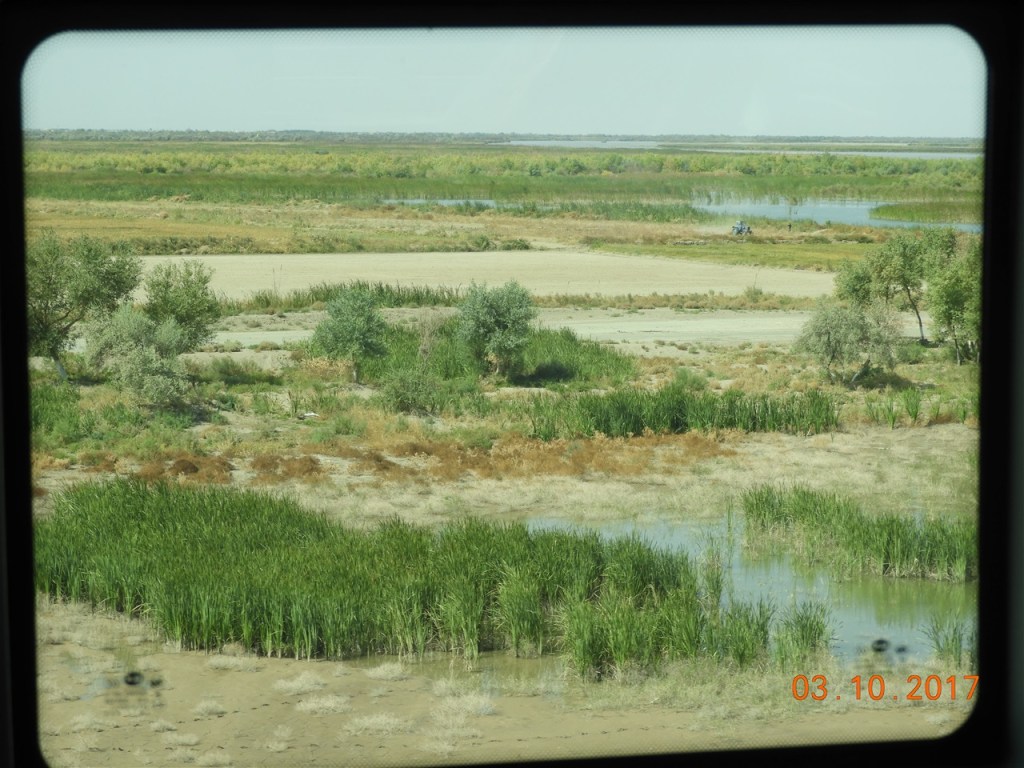
Some of the puddles of water created by the leaks from the Qaraqum Canal. Not a lot of agriculture taking place despite this.
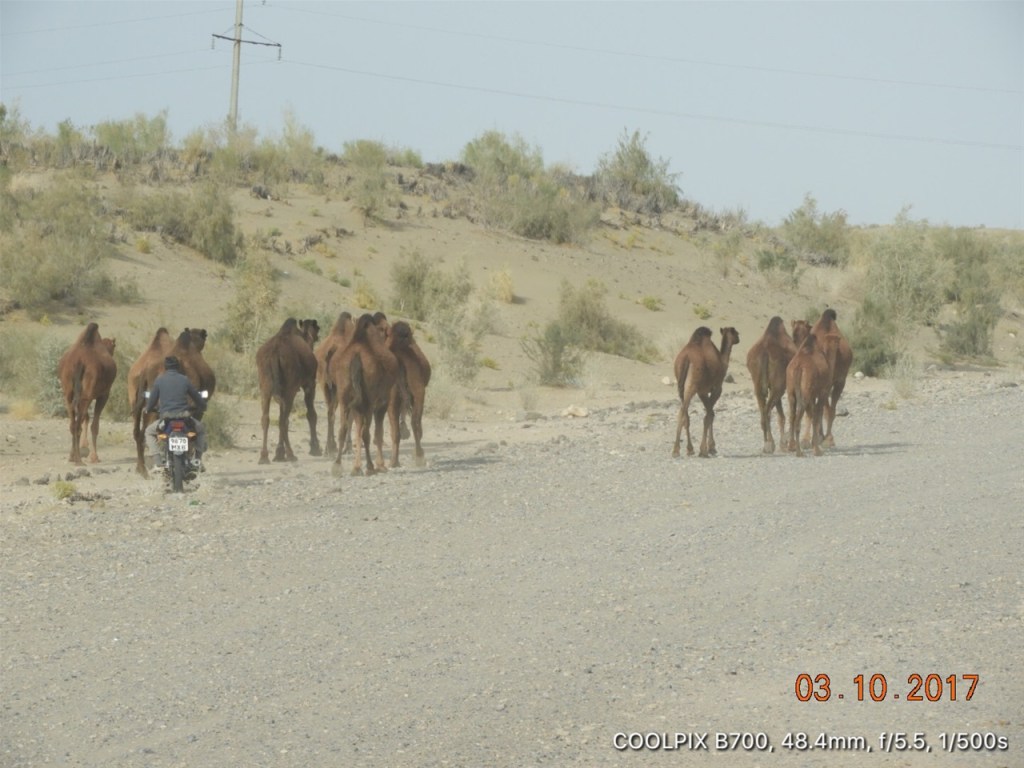
Domesticated camels being herded by motor cycle in the Karakum Desert in Turkmenistan. We discovered later than the beasts are raised for their rough and tough fur which is used to weave carpets.
Although the overwhelming majority of the over the top construction in Turkmenistan takes place in Ashgabat, we did see the occasional marble clad building like this one in the middle of the desert. This one looks as if it might be some kind of stadium.

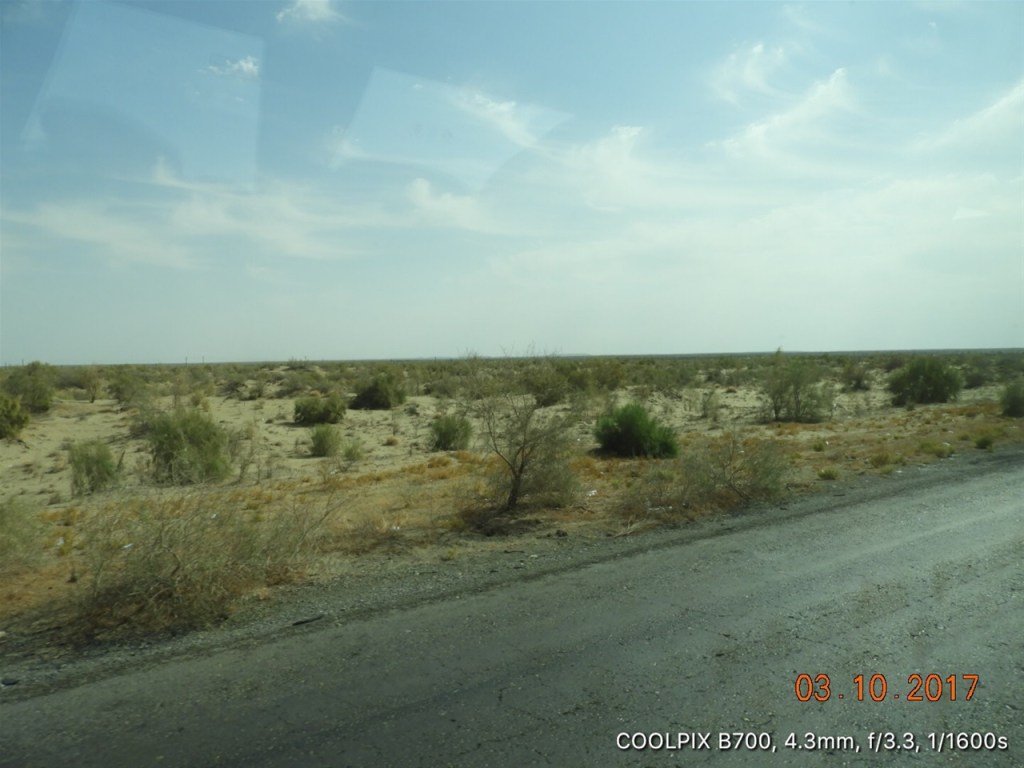
We drove through almost 200 miles of this…..
Again, we were not clear what this development was about – some kind of government offices by the looks of it. But way out in the middle of the Karakum Desert??

Most of the people of Turkmenistan are dirt poor, despite GDP per head of just under $7,000. It looks as if this reflects the enormous diversion of revenue from natural gas [Turkmenistan has the fourth largest natural gas reserves in the world and substantial oil resources] to the huge vanity projects of successive presidents of the country.
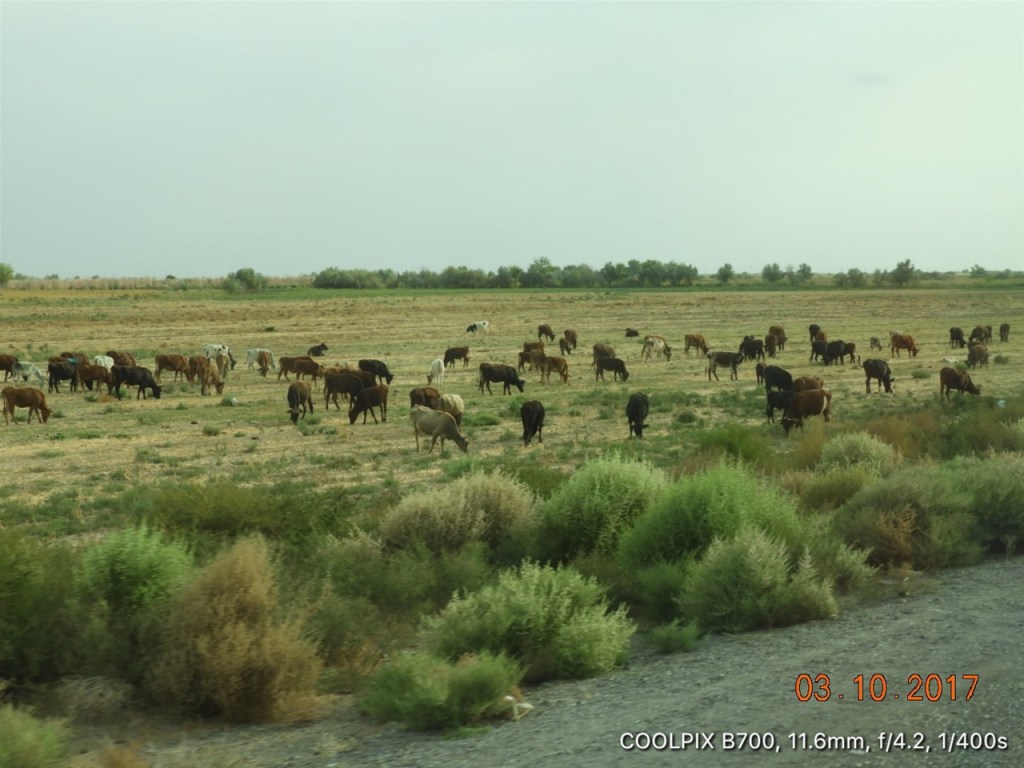
Cattle being grazed in this slightly more fertile area of the Karakom desert. Note the deteriorating road surface: close to the border with Uzbekistan it was pretty good and all the vast highways in and around Ashgabat are first class. So bad did the road become between Turkmenabat on the border and Mary our destination that the biggest hazard was oncoming vehicles on our side of the road all trying to avoid the worst potholes!
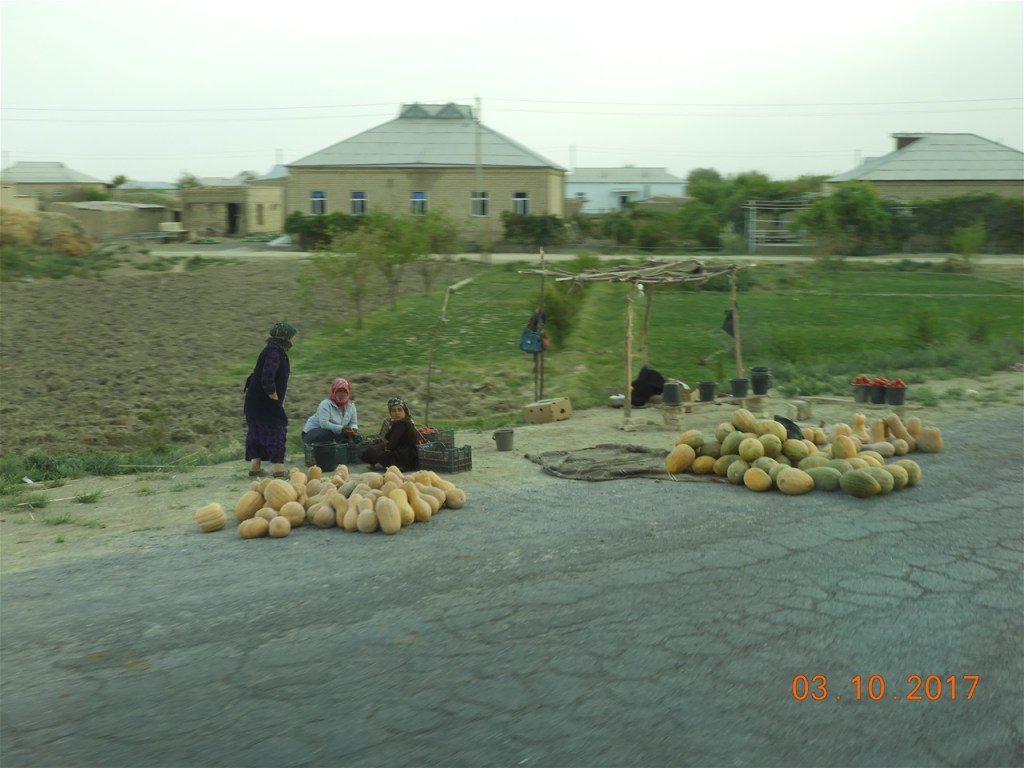
Ladies in traditional dress trying to eke out a living selling melons. Again, note the poor road surface.
The Qaraqum Canal does facilitate growing of some cotton as the Soviets intended, but as in Uzbekistan the crop is harvested by hand, mainly women doing the back breaking work
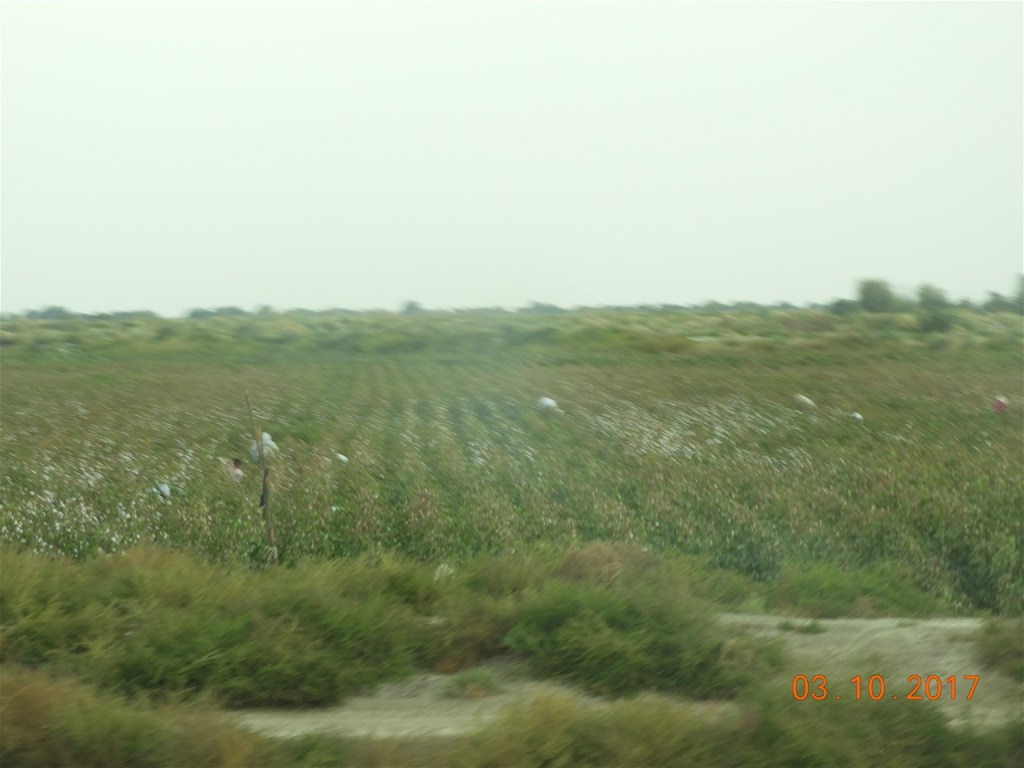

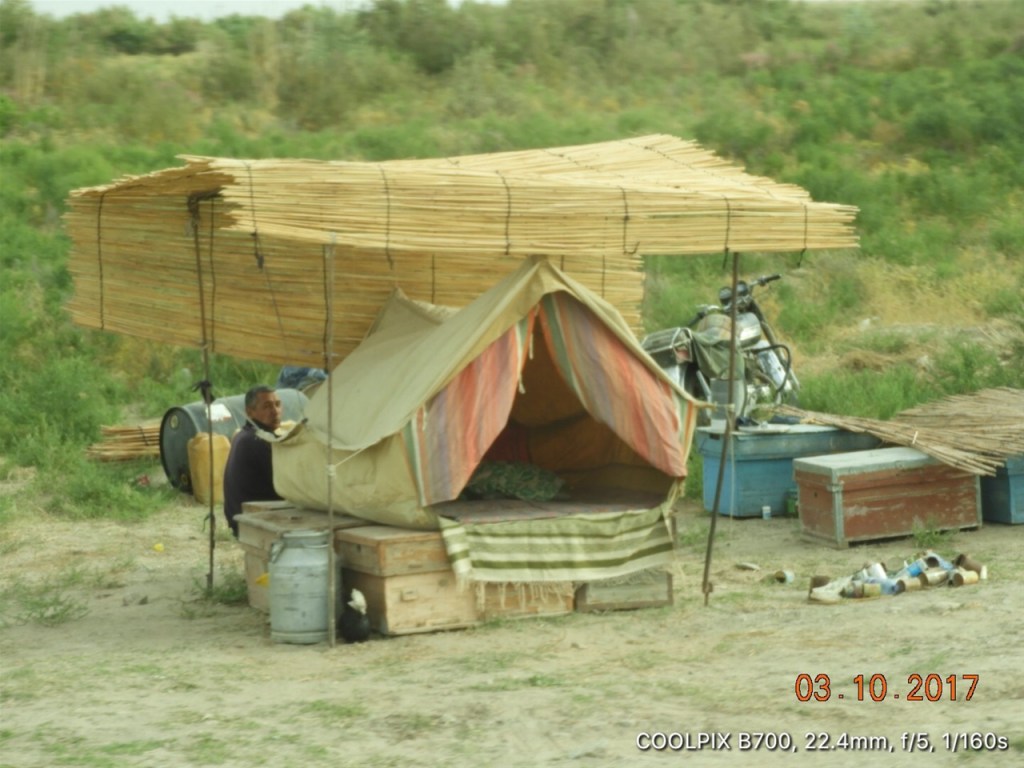
The lonely job of being a camel herder in the Karakom desert in Turkmenistan….
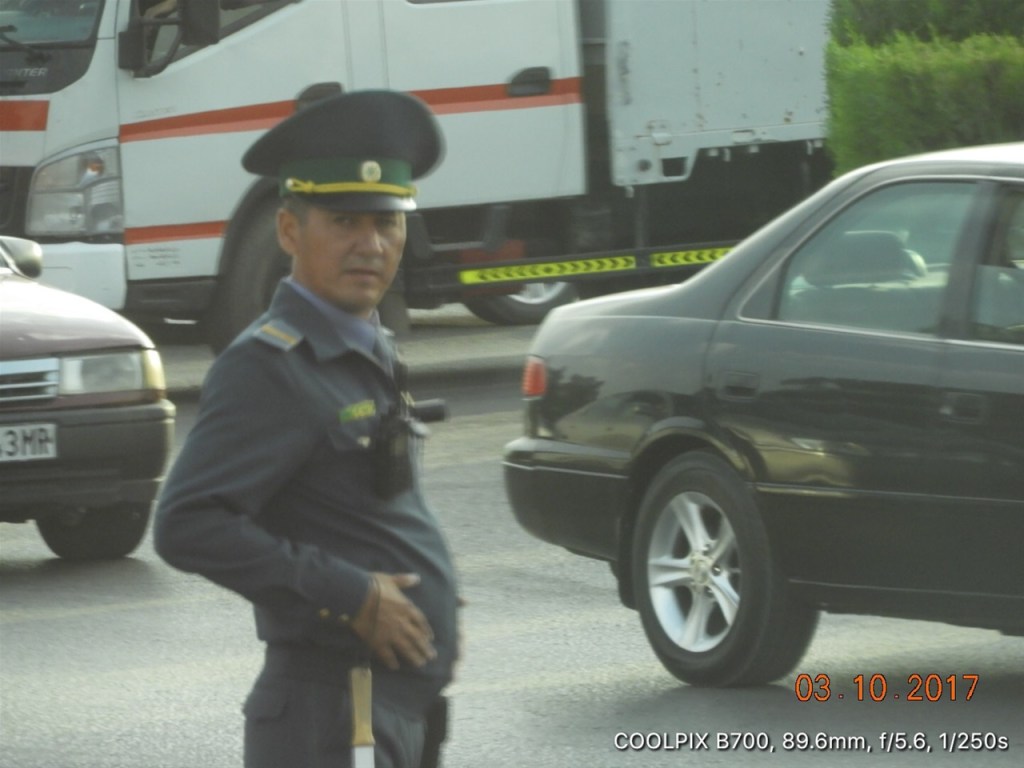
Coming into Mary we saw this policeman with a magnificent hat….
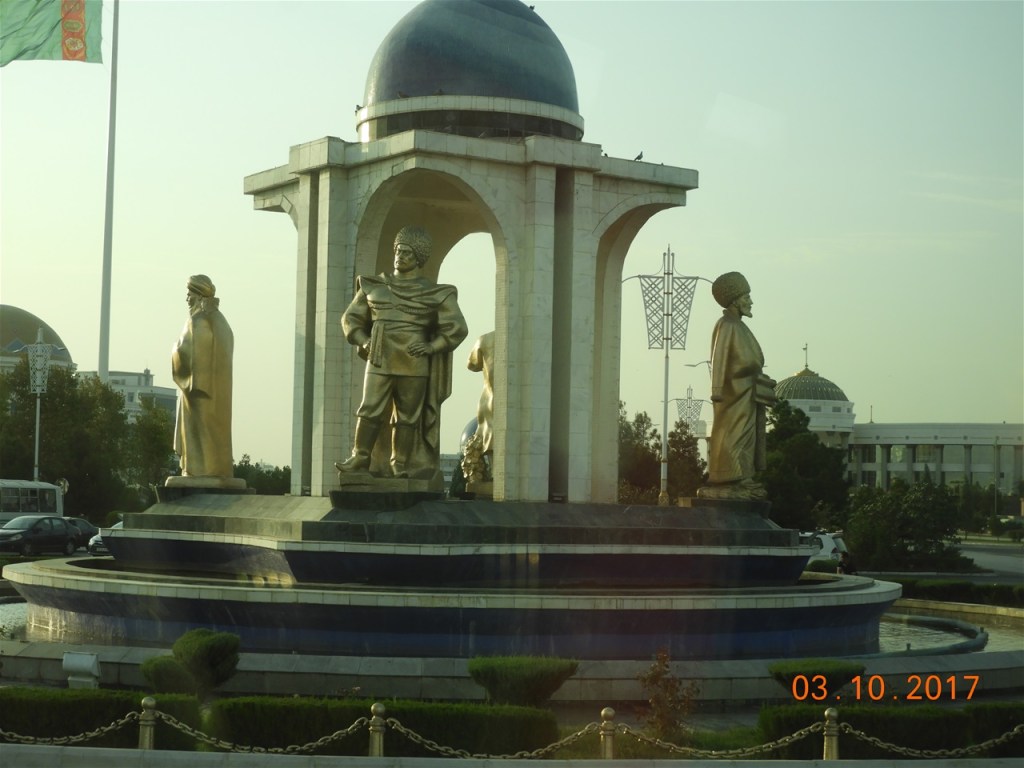
Lots of these rather pretentious statues in Turkmenistan, mainly of Shahs, Khans and Imams from centuries ago. This one is in the centre of Mary.
 Tony's Geriatric Adventures